
Scent Blog
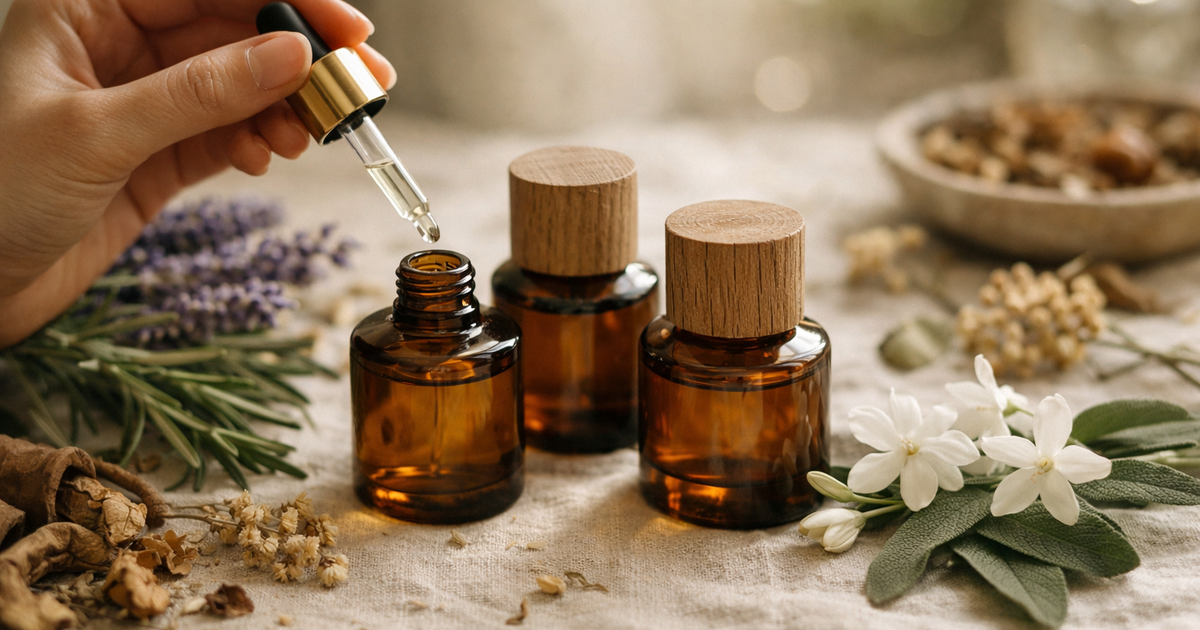
The Quiet Revolution: Why Natural Perfume Brands Are Changing How We Wear Scent
There is a moment, just after you spray a conventional perfume, when the world seems to sharpen into something almost too bright. The initial burst what perfumers call the top note hits your senses like a shout. It is impressive, certainly. But if you listen closely, that shout often comes from a place of chemistry rather than nature. For years, we have been taught that a perfume must be loud to be effective, that it must project across a room and linger for twelve hours to be worth its price. Yet a quiet shift has been underway, one that asks us to reconsider not just what we put on our skin, but how we define beauty, memory, and even health.
This shift centers on a growing appreciation for natural perfume brands. These are not the simple essential oil blends you might find at a weekend craft fair, nor are they the vague “botanical” mists that disappear in thirty minutes. The best natural perfume brands today operate with a level of sophistication that rivals the old luxury houses of Paris. They use absolutes, tinctures, and CO₂ extracts sourced from wildcrafted or organic farms. They respect the raw material’s character rather than forcing it into a predictable shape. And in doing so, they offer something the mainstream industry has largely forgotten: a scent that breathes with you, changes with your chemistry, and tells a story that feels true.
The Hidden Cost of Synthetic Scent
To understand why natural perfume brands have gained such devoted followers, it helps to look at what most commercial fragrances actually contain. The modern perfume industry runs on petrochemicals. A typical designer fragrance is a cocktail of synthetic musks, phthalates, and proprietary aroma chemicals designed to mimic natural scents at a fraction of the cost. These molecules are often incredibly stable, which is why a synthetic rose can smell the same on a paper strip after a week. But stability comes with a downside.
According to a 2018 study published in Environmental Science & Technology, researchers found that synthetic musks commonly used in perfumes accumulate in human adipose tissue and breast milk. The study noted, “The presence of multiple synthetic musk compounds in human samples suggests widespread and ongoing exposure from consumer products, with potential implications for endocrine function.” That is a quote worth sitting with. The source is the American Chemical Society’s journal, a peer-reviewed publication not given to alarmist language. When you spray a conventional perfume, you are not just wearing an accessory. You are absorbing a complex mixture of substances that your body has no evolutionary history with.
This is not to say that all synthetic molecules are dangerous, nor that every natural ingredient is benign. But the concern has pushed many consumers to seek alternatives. They turn to natural perfume brands not out of fear, but out of a desire for transparency. When you buy from a reputable natural perfume house, the ingredient list reads like a garden catalog rather than a chemistry textbook. Bergamot. Frankincense. Jasmine grandiflorum. Vetiver. These are substances humans have worn for thousands of years. There is wisdom in that continuity.
The Art of Blending Without Blueprint
One of the most common misconceptions about natural perfumery is that it is somehow less creative than synthetic work. The opposite is true. Synthetic perfumers have access to thousands of captive molecules notes that do not exist in nature, like the famous “ozonic” accord or the cotton-candy sweetness of ethyl maltol. They can build any fantasy. Natural perfumers, by contrast, work within the constraints of the living world. Their palette is limited to what a plant, flower, bark, or root can offer. And within that limitation, true artistry emerges.
Consider the challenge of longevity. Most natural citrus oils evaporate within fifteen minutes. A synthetic perfumer solves this by adding a fixative like galaxolide. A natural perfumer must instead layer materials: using a touch of resinous benzoin to cradle the lemon, or balancing bitter orange with the deep green persistence of oakmoss. The result is not a single static smell but a slow reveal. The first hour might be bright and sharp. The second hour softens into something warmer. By the fourth hour, the dry-down feels like a second skin. This is not a flaw. It is a conversation.
Natural perfume brands have perfected this dialogue. One can think of brands like Hiram Green, whose entire philosophy rejects synthetic extenders. Or January Scent Project, which uses tinctures of unexpected materials like rhubarb and crab apple. Or the Australian house Goldfield & Banks, which celebrates native botanicals such as blue cypress and desert lime. Each of these natural perfume brands offers something the synthetic giants cannot: a sense of place. You are not just wearing a fragrance. You are wearing the memory of a rainstorm in Tasmania, or the sun-baked herbs of a Tuscan hillside.
What Science Says About Natural Aromatics and Mood
Beyond the artistry, there is a growing body of research into how natural plant compounds affect our nervous system. Unlike synthetic molecules, which are designed solely for odor impact, natural aromatics have co-evolved with humans for millennia. Our olfactory receptors recognize them on a deep level. A 2016 study published in Frontiers in Behavioral Neuroscience examined the effects of linalool, a terpene found in lavender and ho wood, on anxiety-like behaviors in animal models. The researchers wrote, “Inhalation of linalool produced significant anxiolytic effects comparable to those of diazepam, without the sedative or motor-impairing side effects.” That is a remarkable statement. A natural molecule found in many natural perfume brands was shown to calm the nervous system as effectively as a pharmaceutical benzodiazepine, yet without the foggy aftermath.
Now, one should be careful not to overclaim. Wearing a natural perfume is not medicine. But the implication is clear: the fragrances we choose to surround ourselves with are not neutral. They shape our mood, our stress levels, even our cognitive performance. Synthetic copies of these molecules may mimic the smell, but they often lack the full spectrum of minor constituents that give the natural oil its therapeutic character. A synthetic rose is just one molecule: phenylethyl alcohol. A natural rose absolute contains hundreds of compounds, from farnesene to geraniol to the elusive damascenones. The difference is like listening to a single piano key versus a full orchestra.
The Sustainability Question: Not All Natural Is Equal
Of course, the rise of natural perfume brands also raises important questions about sustainability. Harvesting sandalwood, rosewood, or agarwood can devastate ecosystems if done irresponsibly. Some natural materials require enormous plant biomass to produce a tiny amount of oil. For example, it takes roughly two thousand pounds of rose petals to make one pound of rose otto. That is a heavy ecological footprint.
The best natural perfume brands have responded by embracing transparency and ethical sourcing. They work directly with cooperatives, pay fair prices, and use distillation methods that minimize waste. Some have turned to lab-grown natural alternatives: biotechnology companies now produce vanilla, sandalwood, and even patchouli molecules through fermentation, identical to the plant-derived version but without the land use. Others focus on upcycled materials, like the fragrant water left over from orange juice production. A 2020 report from the Journal of Cleaner Production noted, “Consumer demand for natural fragrances is driving innovation in circular economy models within the flavor and fragrance industry, with up to forty percent reduction in water usage reported by early adopters.” The source here is a leading sustainability journal, and the data suggests that the natural perfume sector is not just a niche trend but a proving ground for greener manufacturing overall.
How to Find Your Natural Signature
If you are accustomed to mainstream perfumes, transitioning to natural perfume brands can feel disorienting at first. Your nose has been trained to expect high projection and extreme longevity. Natural perfumes sit closer to the skin. They do not announce your arrival; they reward those who come close. Some people interpret this as weakness. Others come to see it as intimacy.
The key is to adjust your expectations. Spray a natural perfume on your wrist, then wait. Do not judge it in the first five minutes. Let the alcohol evaporate. Let the heart notes emerge. Walk away and come back an hour later. What you will likely notice is that the scent has not faded so much as transformed. A good natural perfume will cycle through phases the way a song moves through verses and a chorus. You might also notice that it does not trigger headaches or respiratory irritation, a common complaint with synthetic heavy fragrances.
Several natural perfume brands offer sample sets, which is the wisest way to begin. Houses like Abel, Strange Invisible, and Providence Perfume Co. all provide curated discovery kits. Wear one scent for a full day. See how it interacts with your skin chemistry. Notice whether it lifts your mood or settles you into a calmer state. A 2019 survey conducted by the Sense of Smell Institute found that nearly sixty percent of participants reported a more positive emotional state when wearing a fragrance containing at least seventy percent natural origin ingredients. The study did not claim causality, but the correlation is striking. We are biological creatures. It makes sense that we respond better to the materials our bodies recognize.
The Counterargument: Why Some Perfumers Stay Synthetic
A fair discussion must acknowledge that not everyone agrees that natural is superior. Some of the most respected perfumers in the world argue that synthetics allow for unprecedented creativity and safety. Synthetic musks, for instance, replaced natural deer musk, which required killing an endangered animal. Synthetic lily of the valley replaced a compound that caused skin sensitization in many people. A quote from a 2015 paper in Cosmetics & Toiletries summarizes this view well: “The vilification of synthetic aroma chemicals ignores their role in reducing biodiversity loss and enabling the reproduction of scents that cannot be sustainably harvested from nature.” That is a reasonable point.
The solution is not to reject synthetics entirely but to demand better from natural perfume brands and conventional houses alike. The ideal fragrance might be a hybrid: natural extracts for their complexity and therapeutic character, combined with safe, biodegradable synthetics for longevity and ethical consistency. Some brands are already moving in this direction. They call themselves “clean” rather than strictly natural. But for the purist, the fully natural route remains compelling precisely because of its constraints. Limits, in art, often produce the most inventive work.
A Personal Shift Worth Making
After writing about fragrance for several years, I have watched my own preferences change. I used to admire the architectural precision of a synthetic chypre. Now I find myself reaching for the gentle, unfolding complexity of a natural tuberose. It is not a moral choice. It is a sensory one. The synthetic perfumes I once loved now smell, to my nose, like high definition images: sharp, vivid, but oddly flat. Natural perfumes smell like real life. They have shadows and highlights. They remind me that beauty does not have to be perfect to be profound.
The market for natural perfume brands has grown steadily, not because of a fad but because people are rediscovering something ancient. Before the industrial revolution, all perfume was natural. The idea of a fragrance constructed entirely in a laboratory would have seemed like sorcery, and not the good kind. We have spent a century marveling at what chemistry can do. Now we are remembering what it cannot do. It cannot replicate the soul of a jasmine flower picked at dawn. It cannot bottle the quiet joy of walking through a pine forest after rain. Those experiences belong to the natural world, and natural perfume brands are simply the messengers.
Where to Begin Your Exploration
If you are ready to explore, start with one of the smaller houses that specializes in transparency. Read the ingredient lists. Look for terms like “alcohol denat. (from organic corn)” rather than just “alcohol.” Avoid vague phrases like “fragrance” or “parfum” without clarification. The best natural perfume brands will tell you exactly which country each raw material came from and whether it was wild harvested or cultivated. That level of honesty is rare in beauty, but it is becoming more common.
You might also consider making a simple oil-based perfume yourself. Dilute a few drops of a quality sandalwood or frankincense essential oil into jojoba. Wear it for a week. Notice how it makes you feel. That direct experience will teach you more than any review. And when you return to the world of commercial natural perfume brands, you will have a clearer sense of what you value. Is it longevity? Complexity? The story behind the bottle? All of these are valid.
The Future of Fragrance Is Grounded
The quiet revolution I mentioned at the beginning is not about rejecting modernity. It is about integrating wisdom. The same technology that brought us synthetic musk can now verify the purity of a jasmine absolute through gas chromatography. We do not have to choose between science and nature. We can use one to honor the other.
As more people ask questions about what they put on their skin, natural perfume brands will continue to refine their craft. They will find better fixatives, more sustainable sources, and more imaginative combinations. They will never compete with the mass market on price or projection, and that is fine. Some things are not meant to be consumed in haste. A good natural perfume is like a good friend: it does not need to shout. You just need to be close enough to listen.
Take your time. Sample widely. And the next time someone leans in and asks what you are wearing, you can answer not with a brand name from a glossy magazine ad, but with a story about a field of lavender in Provence, a grove of vetiver in Haiti, or a distillery in Oregon that turns Douglas fir needles into something unforgettable. That is the gift of natural perfume brands. They do not just sell a scent. They invite you into a relationship with the living earth. And in a world of pixels and plastic, that invitation feels more precious than ever.