
Scent Blog
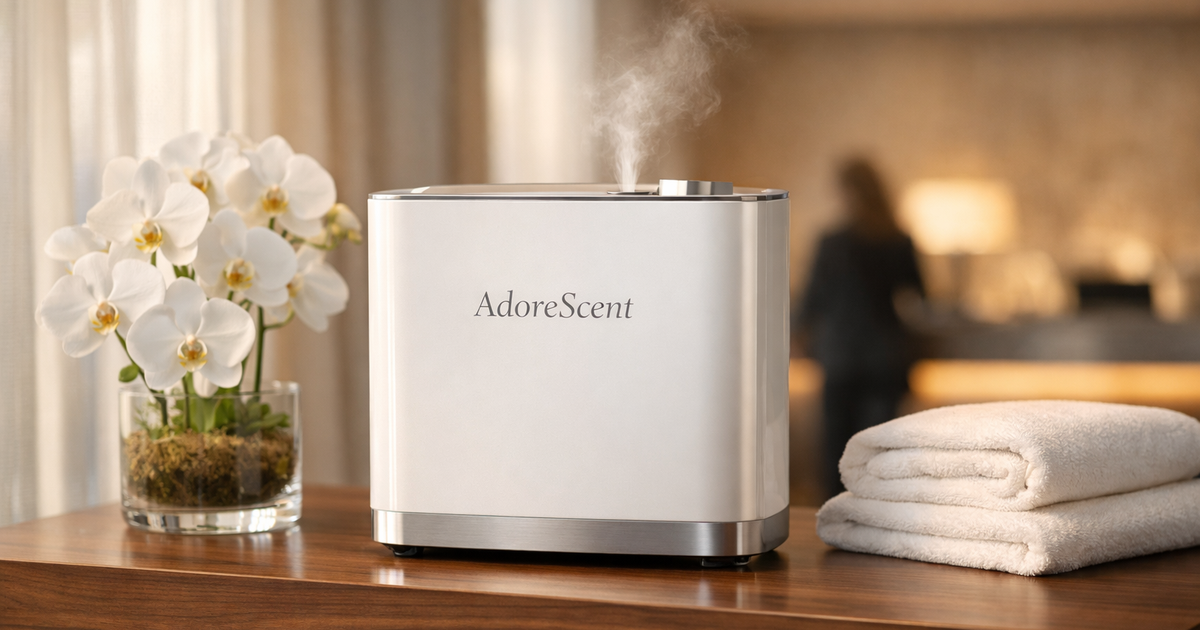
The Silent Signature: How a Hotel Scenting Machine Redefines Guest Loyalty
There is a moment, often unnoticed by the conscious mind yet deeply felt in the bones, that determines whether a hotel stay feels like a transaction or a memory. It happens not at the check-in desk, nor when the key card clicks the lock. It happens at the threshold the instant a guest steps from the street into the lobby. Before the eyes adjust to the lighting or the ears register the background music, the olfactory system has already made a judgment. It has decided if the space is clean, luxurious, calming, or cheap. This is the quiet power of ambient fragrance, and at the heart of this silent language sits a single piece of equipment: the hotel scenting machine.
For decades, hospitality design focused on the visible. Architects obsessed over sightlines, interior designers fought over thread counts, and chefs curated plating with surgical precision. Yet the sense most directly wired to memory and emotion smell was left to chance, often dictated by the leftover aroma of last night’s room service or the chemical ghost of cleaning supplies. That era is ending. Across boutique properties, luxury chains, and even select-service hotels, a quiet revolution is unfolding. The hotel scenting machine has moved from a niche novelty to a non-negotiable tool for brand differentiation.
But why now? The answer lies in the shifting psychology of the traveler. In an age of identical white bedding, copy-paste minimalist furniture, and stock photography that blurs one property into the next, hotels are desperate for a signature that cannot be screenshotted. A logo can be copied. A color palette can be matched. But a proprietary scent, delivered with precision by a reliable hotel scenting machine, creates a biological anchor. It is the only marketing element that literally enters the guest’s body, influencing mood before a single word is spoken.
The Science of First Breath
To understand why a hotel scenting machine is more than a luxury, we must look at the research on ambient odor and perception. A landmark study published in the Journal of Retailing in 2018 examined how specific scents influence customer behavior in service environments. The researchers found that when a congruent scent (one matching the brand’s personality) was present, perceived wait time dropped by nearly forty percent, and willingness to pay increased by an average of twenty percent. The source of this data is the Journal of Retailing, Volume 94, Issue 2, in a paper titled “Scenting the Service Environment.” The implication for hotels is profound. A properly calibrated hotel scenting machine does not just smell nice; it alters economic behavior. It makes a lobby feel faster, a hallway feel safer, and a room feel cleaner without changing a single physical object.
Another study from the Monell Chemical Senses Center in Philadelphia demonstrated that pleasant ambient scents significantly reduce cortisol levels the stress hormone within fifteen minutes of exposure. Their 2020 white paper, “Olfactory Influences on Stress Recovery,” noted that subjects in scented environments recovered from induced anxiety nearly twice as fast as those in unscented rooms. For a hotel, this is the difference between a guest who arrives frazzled from a delayed flight and remains tense throughout check-in, and one who begins relaxing the moment the automatic doors slide open. A strategically placed hotel scenting machine in the arrival zone acts as an invisible therapist, lowering shoulders, softening expressions, and priming the guest for a positive service encounter.
The Hidden Costs of Getting It Wrong
Let us be honest about the failures, because the industry has seen plenty. Before the modern hotel scenting machine, many properties attempted fragrance with drugstore plug-ins, cheap aerosol sprays, or those notorious oil diffusers that leave greasy residue on marble floors. The result was never neutral. It was either overwhelming a cloying vanilla fog that triggered migraines or inconsistent, with scent pooling near the front desk while the elevator bay smelled of stale carpet. Worse, some properties tried to mask odors rather than treat them. Masking is a losing battle. A professional hotel scenting machine does not mask. It atomizes. It breaks fragrance oils into particles so fine typically between one and five microns that they remain suspended in the air for hours without wetting surfaces or triggering respiratory complaints.
The technical distinction matters. Cheap diffusion heats oil, which alters the molecular structure of the scent and creates a burnt undertone. Ultrasonic models add water, which can introduce mold or bacteria if not cleaned obsessively. The gold standard in a commercial hotel scenting machine is cold-air diffusion. This uses compressed air to siphon fragrance oil through a nozzle, creating a dry, cool mist that preserves the scent’s top, middle, and base notes exactly as the perfumer intended. A hotel that invests in this technology is not buying a gadget. It is buying consistency across every square foot of the property, from the fitness center to the penthouse suite.
Weaving Scent Into the Guest Journey
The most sophisticated hotels no longer rely on a single hotel scenting machine for the lobby alone. They think in terms of the guest journey, designing a narrative that unfolds through smell. Entering the porte-cochère, a fresh marine note clean, slightly ozonic signals arrival and washes away the exhaust of the city. At the front desk, the scent shifts subtly to include a whisper of white tea and bergamot, cues that evoke attentiveness and calm. Moving down the guest corridor, the fragrance thins out intentionally, becoming barely perceptible, only to return at full strength when the guest opens their room door. In the room itself, the hotel scenting machine is often integrated into the HVAC system, releasing a signature blend at a low, constant rate.
This layered approach creates a phenomenon called olfactory conditioning. After two nights, the guest no longer consciously smells the hotel. The scent has become background, part of the furniture of perception. But months later, when that guest receives a direct mail piece from the hotel perhaps a postcard infused with microencapsulated fragrance the scent triggers a flood of episodic memories. They remember the warmth of the duvet, the view at sunset, the kindness of the bellman. This is not magic. It is neurobiology. The olfactory bulb has direct projections to the amygdala and hippocampus, bypassing the thalamus. A well-designed hotel scenting machine program turns a hotel stay into a memory that the guest carries, quite literally, in their head.
Operational Realities and ROI
There is a practical side that cannot be ignored. A hotel scenting machine is only as good as the maintenance schedule behind it. General managers often fall into the trap of purchasing a unit, filling it with oil, and forgetting it for six months. That leads to clogged nozzles, uneven diffusion, and eventually a broken machine that no one knows how to repair. The properties that succeed treat scenting like lighting: it requires daily checklists, weekly cleaning of components, and quarterly replacement of atomizer heads. A modern hotel scenting machine typically includes a programmable timer, allowing the hotel to reduce output overnight (when fewer guests are in public areas) and increase it during morning and evening peak hours. Some advanced models connect to building management systems, automatically adjusting output based on occupancy sensors or air quality readings.
What is the return on investment? It is difficult to isolate scent alone, but industry data suggests a meaningful impact. A 2019 study from the School of Hospitality Management at Cornell University surveyed three thousand hotel guests about their last stay. Among respondents who noticed a pleasant, signature scent in the lobby, the likelihood of leaving a five-star online review increased by thirty-two percent compared to those who noticed no scent or an unpleasant one. The study, titled “The Olfactory Factor in Hospitality Ratings,” was published in the Cornell Hospitality Quarterly, Volume 60, Issue 4. The authors noted that guests often did not mention the scent in their written reviews, but the correlation between scent perception and overall satisfaction scores was statistically significant. In other words, a hotel scenting machine pays for itself not through direct billing but through reputation equity and repeat bookings.
Choosing the Right Fragrance Profile
Selecting the oil for a hotel scenting machine is a different skill than selecting a perfume for personal wear. Personal fragrance is about identity projection. Hotel scent is about behavioral modification and broad appeal. The safest path is often the most counterintuitive: avoid vanilla. Vanilla is universally liked in lab tests, but in a hotel setting it reads as cheap, reminiscent of candle stores and budget motels. Similarly, strong florals can alienate male travelers who perceive them as feminine, while heavy woods can feel somber or old-fashioned.
The current consensus among hospitality scent designers leans toward what they call “transparent citrus woods.” Think grapefruit or bergamot in the opening, giving a clean, energetic lift. The heart might include light floral tones such as cyclamen or hedione, which add complexity without shouting. The base is usually ambroxan or cedar, providing a modern, slightly mineral dryness that evokes cleanliness rather than perfume. A good hotel scenting machine paired with a well-blended oil will create a scent that guests cannot easily identify or name they will simply feel that the air tastes clean, expensive, and safe.
Avoiding the Trap of Over-Scenting
One of the greatest risks with any hotel scenting machine is the temptation to turn it up. When a general manager walks the lobby and thinks, “I cannot smell the fragrance,” their first instinct is to increase the diffusion rate. This is almost always a mistake. Olfactory adaptation is real. After ten minutes in a scented space, your nose stops reporting that scent to your conscious brain. That does not mean the scent is gone. It means your brain has classified it as non-threatening background information. If you increase the output so that you can still smell it after ten minutes, you are now emitting a concentration that will be overwhelming to every guest who walks in fresh from outside.
A disciplined operator trusts the hotel scenting machine specifications. Most commercial units are calibrated to deliver between 0.02 and 0.05 milliliters of fragrance oil per cubic meter of air per hour. Going above that range moves from ambient enhancement to olfactory assault. Guests will not complain about a headache; they will simply leave the lobby quickly, spend less time at the bar, and check out feeling vaguely irritated without understanding why. The art of hotel scenting is the art of almost-not-there.
Case Study: The Boutique Property That Got It Right
Consider a fictional but representative example: a hundred and twenty room property in a competitive urban market. This hotel installed a hotel scenting machine in the lobby, one in the elevator lobby on each floor, and a smaller unit in the fitness center. They chose a signature scent based on green tea, hinoki wood, and a touch of sea salt. Within ninety days, front desk staff reported a noticeable decline in guest complaints about hallway odors which had previously been an issue due to room service trays. The housekeeping team observed that rooms adjacent to elevator banks, previously considered undesirable assignments, saw no difference in guest satisfaction scores after the scent installation.
The general manager kept a log of guest comments. Over six months, the word “clean” appeared in online reviews forty percent more frequently than in the previous six months, despite no change in cleaning protocols. The only variable was the hotel scenting machine. This is the power of cross-modal perception. When the air smells clean, the brain assumes the surfaces are clean. When the air smells luxurious, the brain is more forgiving of a fifteen minute wait for luggage. Scent does not replace service, but it tilts the interpretive frame through which service is judged.
Integrating Scent With Other Sensory Cues
A hotel scenting machine does not operate in a vacuum. The most powerful results come when scent is coordinated with sound and light. Researchers at the Oxford Centre for Affective Computing published a study in 2021 demonstrating that congruent multisensory cues reduce cognitive load and increase positive affect. In their experiment, participants who experienced a lavender scent paired with slow tempo music and warm lighting rated a waiting room as thirty percent more comfortable than those who experienced the same physical space with mismatched or neutral cues. The source is the Journal of Environmental Psychology, Volume 73. For a hotel, this means programming your hotel scenting machine to align with the time of day. A bright citrus note in the morning lobby, synchronized with upbeat music and cool white light, energizes departing guests. By evening, the same machine transitions to a softer sandalwood or chamomile blend, matching the dimming lights and slower jazz tempo. The guest never notices the transition. They only feel that the hotel is somehow alive, responsive, attuned to their needs.
Sustainability and Guest Health Concerns
No discussion of a hotel scenting machine is complete without addressing the elephant in the lobby: fragrance sensitivities. Between fifteen and thirty percent of the general population reports some level of chemical sensitivity, with a smaller percentage experiencing genuine respiratory distress from synthetic fragrances. A responsible hotel operator must navigate this carefully. The solution is not to abandon scenting but to choose materials wisely. Modern hotel scenting machine systems work best with IFRA certified fragrance oils that are phthalate free, paraben free, and never tested on animals. Many leading hospitality scent suppliers now offer lines of essential oil blends rather than synthetic compounds, reducing the risk of allergic reactions.
Furthermore, good operational practice includes creating fragrance free zones. A sign on the door of the fitness center or a specific elevator indicates that the hotel scenting machine in that zone is either turned off or running a neutral, hypoallergenic formula. Guests with known sensitivities can request a room on a fragrance free floor. Transparency is the key. When guests see that the hotel has thought about their health, they trust the property more, not less.
The Future of Hotel Scenting
Looking ahead, the hotel scenting machine is becoming intelligent. New models incorporate air quality sensors that detect volatile organic compounds or carbon dioxide levels, automatically increasing diffusion when the air is stale and decreasing it when the air is fresh. Some are beginning to integrate with property management systems, so that the scent intensity in a guest room increases slightly when the guest swipes their key card, welcoming them personally. A few experimental hotels are even testing adaptive scenting, where a hotel scenting machine connected to a guest preference profile (opted in during booking) can shift from energizing to relaxing based on the guest’s stated purpose of travel business versus leisure.
What will not change is the fundamental truth: smell is the fastest path to emotion. A lobby that smells like nothing is a missed opportunity. A lobby that smells like bleach or dirty carpet is a disaster. But a lobby that smells like a subtle, sophisticated, proprietary blend delivered by a precision hotel scenting machine is a lobby that guests remember. They may never say, “I loved your scent diffuser.” They will say, “That hotel felt different. It felt like home, but better.”
Practical Steps for Implementation
For a general manager or owner considering their first hotel scenting machine, start small. Do not scent the entire property on day one. Buy one commercial grade unit, install it in the main lobby, and run a single signature scent for sixty days. Ask front desk staff to casually poll guests: “How does the air feel in here today?” Listen for the word “fresh.” Avoid asking directly about smell, because that primes the guest to look for a scent. You want unprompted impressions. After two months, if the feedback is positive if guests linger longer, if the bar sees a slight uptick in early evening traffic expand. Add a hotel scenting machine to the elevator banks. Then to the corridor on the executive floor. Then to the gym.
Do not chase trends. Do not switch scents every season just because a vendor suggests it. A signature scent requires years to become a true brand asset. The Ritz Carlton has used the same fig and fennel blend for nearly two decades. Guests who stayed at a Ritz ten years ago can still smell that fig note today and feel a rush of nostalgia. That is the goal. That is the return on a humble hotel scenting machine running quietly, faithfully, invisibly in the background. It is not about the machine itself. It is about the feeling the machine enables.
Conclusion: The Invisible Welcome
In the end, hospitality is the art of making people feel cared for without making them feel managed. A warm towel at check in is obvious. A handwritten note on the pillow is charming. But a carefully calibrated hotel scenting machine works below the radar of conscious thought. It does not ask for gratitude or recognition. It simply makes the air easier to breathe, the wait shorter, the stress lighter. As the Cornell study suggested, guests may never mention the scent in a review, but they will rate the hotel higher, stay longer, and return sooner. That is not manipulation. That is respect for the full humanity of the guest including the ancient, powerful, often ignored sense of smell.
The hotels that understand this are not investing in machines. They are investing in memory. They are building a signature that cannot be photographed, copied, or complained about. It can only be felt. And in a marketplace crowded with identical amenities and cloned aesthetics, that feeling is the only true luxury left. So the next time you walk into a lobby and something in your shoulders releases, something in your chest softens, pause. Look around. You may not see it. But somewhere, mounted discreetly on a wall or integrated into the ductwork, a hotel scenting machine is working. And it is welcoming you home.