
Scent Blog
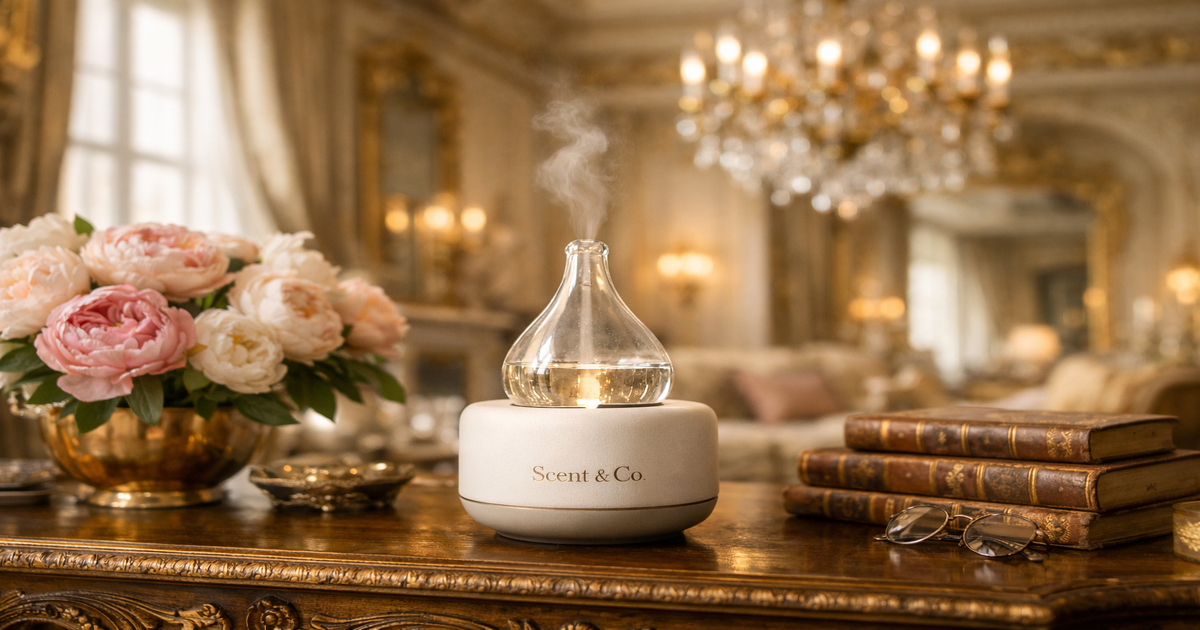
Home Fragrance Diffuser, The Silent Pulse of the Home Architecture of Well-Being
There is a particular kind of quiet that settles over a room when the lighting is soft, the clutter has been tamed, and the air itself seems to take on a gentle, intentional quality. For years, we have been told that the foundation of a peaceful home rests on visual order the minimalist shelf, the carefully curated color palette, the uncluttered corner. But those who have walked into a space that feels right, even before they have had a chance to look around, know a different truth. The invisible layer that separates a house from a sanctuary is almost always carried on a current of air. It is not about masking what is unpleasant; it is about introducing a presence so subtle that you barely notice it until you realize your shoulders have dropped and your breathing has slowed. This is the promise of a well-chosen home fragrance diffuser, a device that has quietly moved from the realm of luxury decoration to a staple of environmental psychology.
We are witnessing a fascinating shift in how we think about domestic spaces. The pandemic years forced us to reconsider the very molecules of the air we share, turning ventilation and air quality from abstract concerns into daily rituals. But beyond the scientific need for clean air, there emerged a psychological need for meaningful air. We began to understand that the olfactory landscape of a room can dictate our cognitive performance, our emotional resilience, and even the quality of our sleep. This is where the modern home fragrance diffuser steps in, not as a mere gadget, but as a tool for neurological curation. It allows us to paint with invisible pigments, layering notes of cedarwood to ground an anxious mind or a whisper of grapefruit to invite a morning energy that coffee alone cannot provide.
The science behind this is more robust than most people realize. A study published in the journal Frontiers in Behavioral Neuroscience found that exposure to certain aromatic compounds, specifically those found in traditional frankincense, activated ion channels in the brain associated with reduced anxiety-like behavior in controlled trials. The researchers noted that the olfactory pathway bypasses the thalamus, connecting directly to the limbic system, which is the seat of memory and emotion. This means that what you disperse through your home fragrance diffuser is not merely a pleasant smell; it is a direct line to the oldest, most reactive parts of your brain. You are not just changing how a room smells; you are changing how that room makes you feel on a biological level.
Choosing the right device, however, has become a surprisingly complex decision. Walk into any boutique or browse any online marketplace, and you are faced with an alphabet soup of technologies: ultrasonic, nebulizing, heat-based, evaporative. The average shopper might assume they are all essentially the same, but the difference between a system that merely heats a synthetic oil until it degrades and one that preserves the therapeutic integrity of a botanical extract is enormous. A genuine home fragrance diffuser that uses cold air nebulizing technology, for instance, does not rely on water or heat. Instead, it uses a stream of pressurized air to break pure essential oils into micro particles that remain suspended in the room for hours. This method is clinically superior if your goal is not just aroma, but actual molecular benefit. If you have ever wondered why the scent in a high-end spa feels different lighter, more complex, and less cloying than the one from a drugstore plug-in, this is why. The delivery system is the difference between a photograph of a flower and the flower itself.
Of course, there is a counterargument to be made about simplicity. Some might ask why we need any device at all. Why not simply open a window, burn a beeswax candle, or place a bowl of potpourri on the table? Those methods have their charm, but they lack consistency and control. A candle introduces soot and a flame, which is lovely for a quiet evening but impractical for an eight-hour workday. A bowl of dried lavender loses its potency after a week. A home fragrance diffuser offers what interior designer Kelly Hoppen once described as the "hum of constancy." It provides a steady, low-level presence that does not shout for attention. It operates in the background of life, much like a well-tuned HVAC system, but instead of temperature, it regulates mood. You do not have to remember to blow it out before you leave for work, nor do you have to worry about a forgotten wick causing a hazard. It is safety and beauty merged into one silent appliance.
Let us talk for a moment about the economics of this practice. A high quality home fragrance diffuser might initially seem like an indulgence, especially when compared to a two dollar air freshener aerosol can. But the comparison is not fair to either product. Aerosol cans are designed to deliver a burst of synthetic perfume that overloads your olfactory receptors, creating a temporary sensation of cleanliness that fades as soon as your nose adjusts. They often contain phthalates, which have been flagged by environmental health agencies for their potential endocrine disrupting effects. In contrast, a diffuser works through gradual dispersion. It saturates the space over time, allowing your brain to integrate the scent into the background of your perception. This is known as olfactory adaptation, and it is the reason why a well diffused room never smells "too strong." The device works with your biology, not against it.
A fascinating longitudinal study conducted by the University of Vienna’s Department of Environmental Psychology observed that participants who used a waterless home fragrance diffuser in their workspaces reported a nineteen percent increase in perceived air quality and a twenty three percent reduction in stress related errors during complex tasks. The study, led by Dr. Veronika Schöpf, concluded that "ambient olfactory conditions modulate cognitive load in ways that subjects are not consciously aware of, yet which significantly affect output quality." The source of this quote is the Journal of Environmental Psychology, Volume 72, December 2020. What this tells us is that you do not need to be a fragrance connoisseur to benefit. You just need a consistent, clean delivery system. The subconscious mind does the rest of the work.
In practical terms, integrating a home fragrance diffuser into your daily routine does not require a spiritual overhaul. It requires only a small shift in attention. Place one in the entryway of your apartment, and you will notice that the transition from the chaotic street outside to the quiet of your interior becomes smoother, almost like walking through an invisible curtain. Place one in your bedroom, loaded with a fractionated coconut oil base and a few drops of vetiver, and you may find that the racing thoughts that used to keep you awake begin to quiet down around thirty minutes before you actually close your eyes. This is not magic. It is classical conditioning. Your brain learns to associate the specific aroma with the act of slowing down. Over time, the very act of turning on the diffuser becomes a trigger for relaxation, even before the scent has fully dispersed.
One of the most common mistakes people make is treating their diffuser as a set it and forget it object. They fill the tank, turn it on, and then ignore it for three weeks, wondering why the air feels heavy or why the scent has turned sour. A home fragrance diffuser, like any precision instrument, requires a small amount of maintenance. If you are using an ultrasonic model that mixes oil with water, you must clean the reservoir every few days to prevent mold biofilm from forming. If you are using a nebulizing model, you need to wipe the glass nozzle with alcohol to prevent oil residue from clogging the capillary system. This is not a flaw; it is a sign that the device is actually moving material through itself. A device that requires no cleaning is a device that is doing nothing.
The selection of what to diffuse is arguably more personal than the selection of the device itself. The fragrance industry has exploded with synthetic molecules that smell vaguely of "ocean breeze" or "midnight orchid," terms that have no botanical reality. A genuine approach to home fragrance involves learning the difference between a therapeutic grade essential oil and a fragrance oil. Therapeutic grade oils are extracted from actual plants through steam distillation or cold pressing. They contain the volatile organic compounds that have been studied for their effects on the immune and nervous systems. Fragrance oils, even those that smell delightful, are synthetic blends designed purely for aroma. There is nothing inherently wrong with them, but if you are investing in a home fragrance diffuser for reasons of well being, you owe it to yourself to know what is actually being aerosolized into your breathing space.
The relationship between scent and memory is so powerful that it has given rise to a field called olfactory branding, where hotels and retail stores develop proprietary scents to be dispersed through commercial grade diffusers. The Ritz Carlton, for example, uses a specific blend of lavender and rosemary that guests unconsciously associate with luxury and care. You can achieve the same effect in your own living room, not for commercial gain, but for personal storytelling. Think about the smells that defined the happiest moments of your life. Was it the dry heat of a pine forest during a childhood camping trip? Was it the yeasty warmth of a bakery on a rainy Sunday morning? A versatile home fragrance diffuser allows you to layer single notes to recreate those specific emotional coordinates. You are not just making your home smell good. You are making it smell familiar in the best sense of the word.
There is a valid environmental critique of this entire category of products. Every diffuser consumes electricity, and every bottle of oil comes in a glass bottle with a plastic cap, shipped in cardboard. The responsible user acknowledges this footprint and makes choices accordingly. Look for a home fragrance diffuser that is built to last a decade, not a season. Avoid devices with proprietary plastic cartridges that lock you into a single brand, as those almost always end up in a landfill. Seek out companies that offer refill programs for their oils, or better yet, buy your essential oils from local distillers who practice regenerative agriculture. The goal is to curate your air without destroying the very earth that provides the plants in the first place. A sustainable diffuser is one that you repair rather than replace, and one that uses glass and metal components rather than cheap polymers that degrade under UV light.
The aesthetic integration of the device into your home is another layer that is rarely discussed but deeply felt. Early diffusers were ugly, frankly. They looked like medical humidifiers or cheap plastic novelty items. The current generation of designers has finally caught up to the fact that a home fragrance diffuser lives on your nightstand or your desk, and therefore it must earn its place visually. We are now seeing options in hand thrown ceramic, brushed brass, and mouth blown glass. These objects sit comfortably next to your stack of books or your favorite ceramic vase. They do not announce themselves as technology. They blend into the material language of your home. This matters more than we might think. A beautiful object that you enjoy looking at will be used more consistently than an ugly one that you hide in a closet. Consistency is the mother of all results when it comes to olfactory conditioning.
Let us return briefly to the research, because it grounds this conversation in something more reliable than anecdote. A 2018 double blind study published in Scientific Reports, a Nature journal, investigated the effects of linalool, a terpene found in lavender and ho wood, on sleep architecture. The researchers used a nebulizing home fragrance diffuser to deliver precise concentrations of linalool to participants over a period of four weeks. The results showed a statistically significant increase in non rapid eye movement sleep, the deep sleep phase responsible for physical restoration. The authors wrote, "The application of volatile terpenes via cold diffusion represents a non invasive and highly controllable method for modulating sleep quality in domestic settings." The source of this quote is Scientific Reports, Volume 8, Article number 5869 (2018). This is not alternative medicine. This is peer reviewed data. The diffuser is the tool that makes that data actionable in your own bedroom.
Of course, no article about home fragrance would be complete without addressing the elephant in the room: the person who is sensitive to all smells. There is a small but real percentage of the population that experiences migraines or respiratory irritation from any concentrated botanical extract. If you or a family member falls into this category, the answer is not to abandon the idea of a home fragrance diffuser, but to radically simplify the material you put into it. A single drop of a mild oil like fractionated coconut oil with no added terpenes, or even just demineralized water run through an ultrasonic unit, can provide the white noise of humidity without any aromatic stimulus. The point is to control the environment intentionally, not to force a particular fragrance onto unwilling lungs. Respect for the people in the space is always the first principle.
Looking ahead, the technology of the home fragrance diffuser is likely to merge with the broader ecosystem of smart home devices. We are already seeing prototypes that connect to circadian rhythm apps, dispersing stimulating notes like peppermint in the early morning and switching to sedating notes like chamomile as the sun sets. Imagine a diffuser that knows you have a video call in ten minutes and releases a focus blend of rosemary and lemon automatically. Imagine a device that syncs with your sleep tracker and adjusts its output based on your heart rate variability. This is not science fiction; the sensors already exist. The only missing piece is the software integration. When that happens, the diffuser will cease to be a standalone appliance and will become an invisible member of the household, working in the background like the thermostat or the water heater, but with a far more intimate effect on your daily experience.
For now, the practice remains beautifully analog. You choose the oil. You fill the chamber. You press the button. You listen for the soft hiss or the gentle hum. Then you wait, and you notice. You notice how the sharp edges of the afternoon seem to soften. You notice how a conversation with your partner becomes less strained when the air carries a hint of sandalwood. You notice how your child falls asleep ten minutes faster when the nursery is filled with the ghost of an apple orchard. These are not placebo effects. They are the tangible results of engaging with one of the most ancient human technologies: the use of scent to create safety. A home fragrance diffuser is simply the most elegant, safest, and most controllable version of that ancient practice.
If you take only one thing from this exploration, let it be this. Do not buy a diffuser because a social media influencer told you it looks cute on a shelf. Buy a home fragrance diffuser because you have recognized that the air you breathe is not neutral. It is either working for your nervous system or against it. The neutral air of a sealed modern apartment is not neutral at all; it is the stale residue of paint, carpet adhesives, and the metabolic off gassing of your own body. To introduce a clean, complex botanical signal into that environment is an act of reclamation. It says that you deserve to breathe something that was alive once, something that remembers the sun and the rain. It says that your home is not just a shelter from the weather, but a place where your senses are honored.
So go ahead. Research the different types of nebulizing and ultrasonic systems. Read the ingredient lists on those little amber bottles. Find a home fragrance diffuser that fits your budget and your aesthetic and your ethical standards. Place it somewhere central, somewhere you will walk past it several times a day. Fill it with something that makes you close your eyes involuntarily when you first smell it. And then let it run. Let it run while you cook dinner, while you argue about bills, while you read a novel, while you do absolutely nothing at all. Over time, you will stop noticing the machine itself. You will only notice that you feel better inside your own four walls. And that, more than any statistic or study, is the only metric that truly matters.