
- Diffuser Combo UAE Deals
- Scents
- Floral (Rose, Jasmine)
- ADDRESS Aroma Oil Diffuser 500ML
- PASSION Aroma Oil Diffuser 500ML
- HARMONY Aroma Oil Diffuser 500ML
- LUXURY Aroma Oil Diffuser 500ML
- MOTION Aroma Oil Diffuser 500ML
- SOSPHERA Aroma Oil Diffuser 500ML
- SENSE Aroma Oil Diffuser 500ML
- G BLOOM Aroma Oil Diffuser 500ML
- LEGENDARY Aroma Oil Diffuser 500ML
- FOR HER Aroma Oil Diffuser 500ML
- No 3 Aroma Oil Diffuser 500ML
- PINK Aroma Oil Diffuser 500ML
- Fresh (Citrus, Aquatic)
- Woody / Oriental / Spicy (Oud, Vanilla, Amber, Sandalwood)
- ROYAL WOOD Aroma Oil Diffuser 500ML
- BROWN ORCHID Aroma Oil Diffuser 500ML
- BAKHOUR Aroma Oil Diffuser 500ML
- AMBER LEATHER Aroma Oil Diffuser 500ML
- UNIQUE WOOD Aroma Oil Diffuser 500ML
- ELITE WOOD Aroma Oil Diffuser 500ML
- MARRAKECH Aroma Oil Diffuser 500ML
- Patchouli Aroma Oil Diffuser 500ML
- COTTON CLOUD Aroma Oil Diffuser 500ML
- CHRISTMAS Aroma Oil Diffuser 500ML
- GABRIEL Aroma Oil Diffuser 500ML
- CINNAMON TONKA Aroma Oil Diffuser 500ML
- COFFEE BEANS Aroma Oil Diffuser 500ML
- Aromatic (Fougere) – Lavender, Sage, Rosemary
- Fruity (Berry, Peach)
- Floral (Rose, Jasmine)
Scent Blog
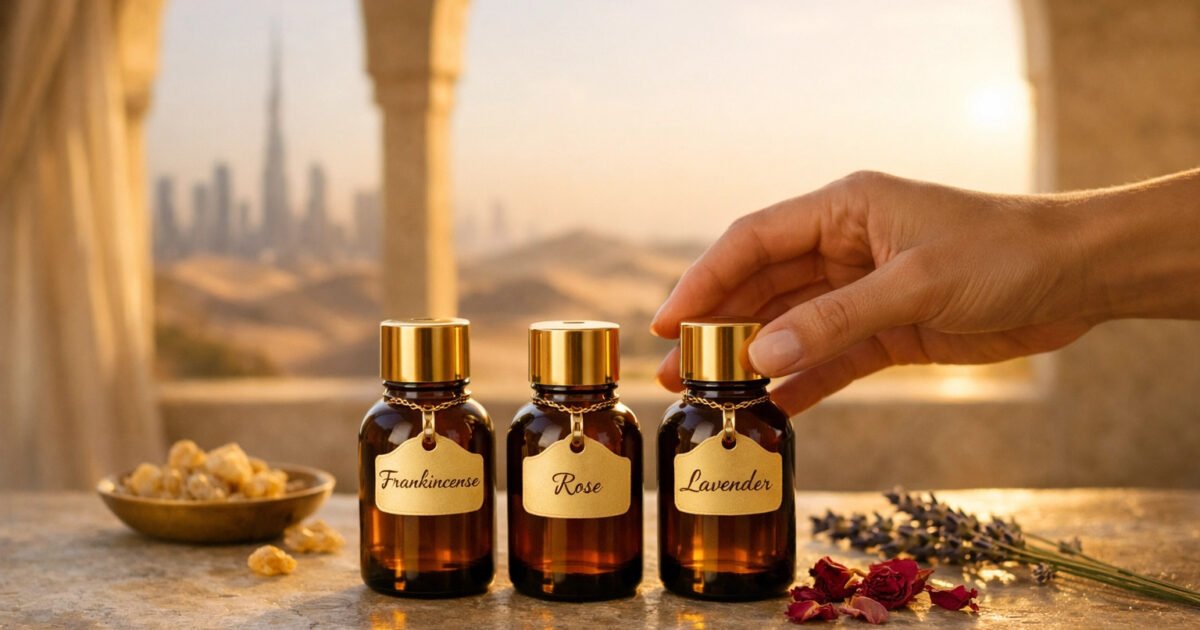
The Resurgence of Aromatics: Why the Modern Wellness Journey Begins with Essential Oils UAE
In the heart of the Arabian Peninsula, where the sun-scorched sands meet the ultramodern skyline of a global metropolis, there exists a sensory tradition that predates the high-rises by millennia. The region has always been a nexus of trade, culture, and fragrance. Long before glass bottles and laboratory distillations, caravans traversed the Empty Quarter carrying precious resins, rare woods, and potent botanicals. Today, this ancient heritage is being rediscovered by a new generation seeking authenticity in an increasingly synthetic world. The conversation surrounding wellness has shifted from quick fixes to holistic integration, and at the center of this shift lies the growing appreciation for the therapeutic depth found in essential oils UAE.
To understand the current market landscape, one must look beyond the glittering storefronts of luxury perfumeries. There is a distinct movement toward intentional living. Consumers are no longer satisfied with simply smelling pleasant; they are seeking emotional regulation, cognitive clarity, and physiological balance. This is where the science of aromatherapy meets the art of living. The availability of high-grade essential oils UAE has expanded dramatically, offering residents and visitors alike access to distillates that were once reserved for royalty. Whether it is the calming presence of true Bulgarian lavender or the invigorating sharpness of Australian tea tree, these volatile plant compounds are becoming staples in the modern Emirati home.
The Science Beneath the Scent
The skepticism that once surrounded aromatherapy is rapidly dissipating, thanks to a growing body of clinical research validating what ancient cultures knew instinctively. Aromatherapy is not merely a pseudoscience; it is a field of study recognized for its impact on the limbic system the part of the brain responsible for emotion, memory, and arousal. When we inhale aromatic molecules, they travel directly to the brain without being metabolized by the liver, creating near-instantaneous psychological effects.
This biological pathway explains why the demand for pure, unadulterated essential oils UAE is surging. In a region characterized by fast-paced professional environments and a climate that often keeps people indoors, managing stress is a priority. A published study highlighted the efficacy of essential oils in reducing anxiety. The research indicated that participants exposed to lavender oil exhibited significant decreases in blood pressure, heart rate, and serum cortisol levels compared to the control group. The study concluded that such interventions could serve as a viable complementary therapy for autonomic arousal. For those navigating the high-stakes environment of Dubai or Abu Dhabi, having access to therapeutic-grade essential oils UAE is becoming less of a luxury and more of a necessity for daily self-regulation.
A Return to Traditional Roots
It is impossible to discuss fragrance in the Gulf without acknowledging the deep cultural significance of Oud, Amber, and Rose. However, the modern shift toward essential oils represents an evolution of this tradition. While attars and perfumes are often complex blends designed to project outward, essential oils are viewed as an internal, personal practice. They are the raw, unadulterated voice of the plant. The modern consumer in the UAE is increasingly educated; they understand that a bottle labeled "pure" is not always genuine. Consequently, the market for essential oils UAE has matured, demanding transparency regarding sourcing, distillation methods, and chemical composition.
There is a distinct preference for oils that are steam distilled or cold pressed without the use of chemical solvents. This purity is crucial because the therapeutic benefits are directly tied to the chemical integrity of the oil. For instance, the frankincense resin, known locally as luban, has been used for centuries in the region for its spiritual and medicinal properties. However, when distilled into a high-quality essential oil, the boswellic acids and sesquiterpenes become bioavailable in a way that burning the raw resin alone cannot achieve. This understanding bridges the gap between cultural heritage and modern scientific application, positioning essential oils UAE as a cornerstone of integrative health.
The Respiratory and Immune Support Paradigm
One of the most compelling reasons for the integration of essential oils into daily life in the UAE is the environmental context. The reliance on air conditioning for a majority of the year creates sealed environments where airborne pathogens can circulate. Furthermore, the influx of travelers from around the globe creates a dynamic environment for seasonal immune challenges. In this context, essential oils known for their antimicrobial and expectorant properties have found a significant role.
Eucalyptus, peppermint, and tea tree oils are particularly prized for their ability to cleanse the air and support respiratory function. A review published in the Journal of Essential Oil Research examined the antimicrobial activity of several common essential oils. The authors noted that compounds such as 1,8-cineole (found in eucalyptus) and menthol (found in peppermint) demonstrated significant efficacy against airborne bacteria and fungi. They suggested that the diffusion of these oils in indoor environments could contribute to a reduction in airborne microbial load.
For families across the Emirates, diffusing these oils has become a routine practice. The availability of certified pure essential oils UAE ensures that when families engage in this practice, they are not introducing synthetic fragrances or volatile organic compounds into their homes, but rather the genuine molecular structure of the plant itself. This aligns with a broader global trend of "conscious living," where individuals take proactive steps to curate their internal and external environments.
Navigating the Market: Purity vs. Adulteration
As the market for essential oils UAE expands, so does the risk of adulteration. This is a critical issue that professionals and enthusiasts alike must confront. The global essential oil market is plagued by issues of mislabeling, where synthetic extenders or cheaper botanical substitutes are added to lower production costs. In a sophisticated market like the UAE, consumers are increasingly aware of this and are demanding accountability.
Third-party testing, gas chromatography, and mass spectrometry reports are becoming the standard by which serious users judge quality. The difference between a therapeutic oil and a merely fragrant oil is often found in the complexity of the chemical profile. For example, true German chamomile contains chamazulene, a compound that gives the oil a deep blue color and possesses potent anti-inflammatory properties. A diluted version, often sold as "chamomile," lacks this compound and therefore lacks the therapeutic effect.
This discernment is particularly important in the UAE, where the climate can be harsh on the skin. Many practitioners use essential oils in conjunction with traditional natural base oils like jojoba or argan to create skincare solutions. The anti-inflammatory and antimicrobial properties of oils like helichrysum or lavender are highly sought after for soothing sun exposure or minor skin irritations. Ensuring that these essential oils UAE are sourced from reputable distributors who can verify their botanical origin and distillation date is paramount for safety and efficacy.
The Art of Integration in Urban Living
Living in a bustling city like Dubai or Sharjah presents unique sensory challenges. The constant stimulation of traffic, construction, and digital connectivity can lead to sensory overload. Essential oils offer a tool for creating micro-environments of calm. This is not merely about scenting a room; it is about using specific chemical constituents to shift brainwave states.
The concept of "environmental scenting" has moved from hotels and spas into private residences. High-net-worth individuals in the UAE are investing in custom-built nebulizing diffusers that disperse undiluted essential oils into the air without heat, preserving their therapeutic integrity. In these spaces, the choice of essential oils UAE is deliberate. For a home office, a blend of rosemary and lemon might be diffused to enhance concentration and memory retention. For a bedroom, a blend of vetiver and sweet marjoram is utilized to facilitate deep sleep.
A fascinating published study explored the effects of lavender on sleep quality. The research found that the inhalation of lavender oil increased the percentage of deep or slow-wave sleep in participants. It also noted a subjective increase in vigor upon waking. For a region where the work week often begins on Sunday and the pace is relentless, the ability to curate sleep hygiene using essential oils UAE is invaluable. It represents a non-pharmaceutical intervention that supports the body’s natural circadian rhythms.
Culinary and Therapeutic Crossovers
While the inhalation and topical application of essential oils dominate the conversation, there is a growing niche in the UAE for culinary-grade essential oils. This is a domain that requires extreme caution but offers unique benefits. Certain oils, such as peppermint, lemon, and oregano, have a history of internal use in traditional medicine. However, the modern application demands pharmaceutical-grade purity to ensure no contaminants or synthetic residues are present.
The vibrant culinary scene in the UAE, which blends Levantine, Persian, and international influences, is seeing a resurgence in the use of these potent extracts. A single drop of high-quality lemon essential oil can replace the zest of several lemons without the bitterness. More importantly, the antimicrobial properties of oils like oregano have drawn the interest of those looking to support gut health.
Research published in the journal Critical Reviews in Food Science and Nutrition highlighted the potential of essential oils as natural food preservatives. The study emphasized that the antioxidant and antimicrobial properties of certain oils could inhibit the growth of foodborne pathogens. For the health-conscious consumer in the UAE, integrating these potent botanicals specifically essential oils UAE that are certified for internal use represents a convergence of culinary art and preventative health.
The Role of the Practitioner
With the proliferation of information, and unfortunately misinformation, the role of certified aromatherapists and wellness coaches has become increasingly important in the region. The UAE is home to a growing community of holistic practitioners who guide clients on safe usage. This is crucial because essential oils are highly concentrated. Misuse, such as applying undiluted "hot" oils like cinnamon or clove directly to the skin, can lead to sensitization or burns.
Professional practitioners in the UAE emphasize the importance of dilution ratios, phototoxicity (particularly with citrus oils in a sunny climate), and the specific considerations for pregnant women and children. They serve as the bridge between the raw product the essential oils UAE and the safe, effective application. This professional oversight elevates the practice from a trendy hobby to a legitimate component of preventative healthcare.
Furthermore, these practitioners are often involved in the selection process for boutique clinics and luxury wellness retreats across the Emirates. They understand that the molecular complexity of an oil dictates its outcome. They look for oils that are not only chemically pure but also energetically vibrant often preferring oils that are wildcrafted or sourced through sustainable harvesting practices.
Sustainability and Ethical Sourcing
A critical conversation emerging in the global essential oil industry, which resonates deeply in the UAE, is that of sustainability. The region has a complex history with natural resources, from pearls to oil. As the UAE pivots toward a future defined by sustainability and innovation, consumers are increasingly questioning where their essential oils UAE come from.
The demand for sandalwood, rose, and frankincense has put pressure on native ecosystems in countries like India, Somalia, and Oman. Ethical consumers are now looking for brands that engage in regenerative sourcing companies that pay fair wages to harvesters and ensure that plants are not over-harvested. In the UAE, which serves as a global hub, there is a growing expectation that the products on the shelves align with the nation’s values of sustainability.
This has led to a rise in direct trade relationships between UAE-based distributors and small-scale farmers around the world. The story behind the oil matters. A bottle of jasmine grandiflorum that was hand-picked at dawn in India and distilled within hours carries a different energetic signature and often a different chemical profile than a mass-produced version. For the discerning user of essential oils UAE, this narrative of origin is as important as the aroma itself.
Future Trends: Personalization and Technology
Looking forward, the trajectory of the essential oil market in the UAE is moving toward hyper-personalization. We are seeing the emergence of AI-driven diagnostic tools that suggest essential oil blends based on biometric data, such as heart rate variability or sleep patterns. This fusion of technology and nature is particularly appealing in a tech-forward society like the UAE.
Wearable diffusers and smart home integration are also gaining traction. Imagine a home where the ambient scent shifts automatically based on the time of day or the stress level detected in your voice. In this future, the demand for single-origin, high-quality essential oils UAE will only intensify because the efficacy of these smart systems relies entirely on the integrity of the oil being diffused.
Additionally, there is a growing movement toward local distillation. While the UAE is not typically an agricultural powerhouse for lavender or peppermint, the interest in distilling local flora such as the Ghaf tree or desert rose is gaining traction among niche perfumers and naturalists. This represents a fascinating evolution: the shift from being a consumer of imported oils to a producer of region-specific distillates. This not only supports local biodiversity but also creates a unique product category that cannot be replicated elsewhere.
The Importance of Education
To sustain the growth of this industry, education is paramount. The consumer base in the UAE is highly educated and multilingual. They are reading international research, attending workshops, and often, traveling to source countries to witness distillation firsthand. This level of engagement forces the market to maintain a high standard.
Retailers specializing in essential oils UAE are increasingly moving away from high-pressure sales tactics and toward educational models. They host classes on blending, chemistry, and safety. They provide literature that explains the difference between an absolute and a distillate, or why a cold-pressed lime oil is different from a steam-distilled lime oil. This educational approach builds trust and ensures that customers use the oils safely and effectively.
This also protects against the dangerous trend of self-prescription without understanding contraindications. For instance, individuals on certain medications, particularly antidepressants or blood thinners, need to be aware of potential interactions. Grapefruit essential oil, for example, is known to interact with the cytochrome P450 enzyme system in the liver, potentially altering drug metabolism. A responsible market for essential oils UAE ensures that such critical safety information is front and center.
A Holistic Lifestyle Choice
Ultimately, the integration of essential oils into the fabric of daily life in the UAE represents a broader cultural shift toward holistic wellness. It is a move away from reactionary medicine toward proactive vitality. People are no longer just looking to treat symptoms; they are looking to build resilience. Whether it is a business executive using peppermint oil to stay alert during a late-night meeting, a mother using a gentle blend of chamomile to soothe a restless child, or a yoga practitioner using sandalwood to deepen their meditative practice, the applications are endless.
The oils serve as anchors. In a transient city where expatriates make up a significant portion of the population, scent has the power to ground us. It can transport us, heal us, and connect us to something larger than the immediate chaos of modern life. The specific market for essential oils UAE has flourished precisely because it meets this unique demographic need providing a sense of stability, purity, and connection in a fast-moving environment.
Moreover, the social aspect cannot be ignored. Essential oil blending parties and wellness circles are becoming common social gatherings. They offer an alternative to the traditional nightlife scene, fostering community around shared health goals. In these settings, the discussion often turns to sourcing, which leads back to the critical importance of finding trustworthy suppliers of essential oils UAE that prioritize purity over profit.
Conclusion
As we move further into an era defined by digital overload and environmental stressors, the return to botanical simplicity offers a compelling counterbalance. The story of essential oils UAE is not just a commercial trend; it is a narrative of cultural revival, scientific validation, and personal empowerment. From the ancient souks that once traded frankincense to the sleek wellness clinics of Dubai Marina, the thread of aromatic healing remains unbroken.
The modern consumer is discerning, informed, and intentional. They understand that the bottle of oil they bring into their home is more than a fragrance it is a tool for transformation. It is a commitment to breathing cleaner air, to calming a frazzled nervous system, and to honoring the ancient wisdom that nature provides the most sophisticated pharmacy. As the UAE continues to position itself as a global leader in innovation and quality of life, the demand for authentic, therapeutic-grade essential oils UAE will undoubtedly continue to rise, solidifying its place not as a fleeting luxury, but as an essential component of modern living.