
- Diffuser Combo UAE Deals
- Scents
- Floral (Rose, Jasmine)
- ADDRESS Aroma Oil Diffuser 500ML
- PASSION Aroma Oil Diffuser 500ML
- HARMONY Aroma Oil Diffuser 500ML
- LUXURY Aroma Oil Diffuser 500ML
- MOTION Aroma Oil Diffuser 500ML
- SOSPHERA Aroma Oil Diffuser 500ML
- SENSE Aroma Oil Diffuser 500ML
- G BLOOM Aroma Oil Diffuser 500ML
- LEGENDARY Aroma Oil Diffuser 500ML
- FOR HER Aroma Oil Diffuser 500ML
- No 3 Aroma Oil Diffuser 500ML
- PINK Aroma Oil Diffuser 500ML
- Fresh (Citrus, Aquatic)
- Woody / Oriental / Spicy (Oud, Vanilla, Amber, Sandalwood)
- ROYAL WOOD Aroma Oil Diffuser 500ML
- BROWN ORCHID Aroma Oil Diffuser 500ML
- BAKHOUR Aroma Oil Diffuser 500ML
- AMBER LEATHER Aroma Oil Diffuser 500ML
- UNIQUE WOOD Aroma Oil Diffuser 500ML
- ELITE WOOD Aroma Oil Diffuser 500ML
- MARRAKECH Aroma Oil Diffuser 500ML
- Patchouli Aroma Oil Diffuser 500ML
- COTTON CLOUD Aroma Oil Diffuser 500ML
- CHRISTMAS Aroma Oil Diffuser 500ML
- GABRIEL Aroma Oil Diffuser 500ML
- CINNAMON TONKA Aroma Oil Diffuser 500ML
- COFFEE BEANS Aroma Oil Diffuser 500ML
- Aromatic (Fougere) – Lavender, Sage, Rosemary
- Fruity (Berry, Peach)
- Floral (Rose, Jasmine)
Scent Blog
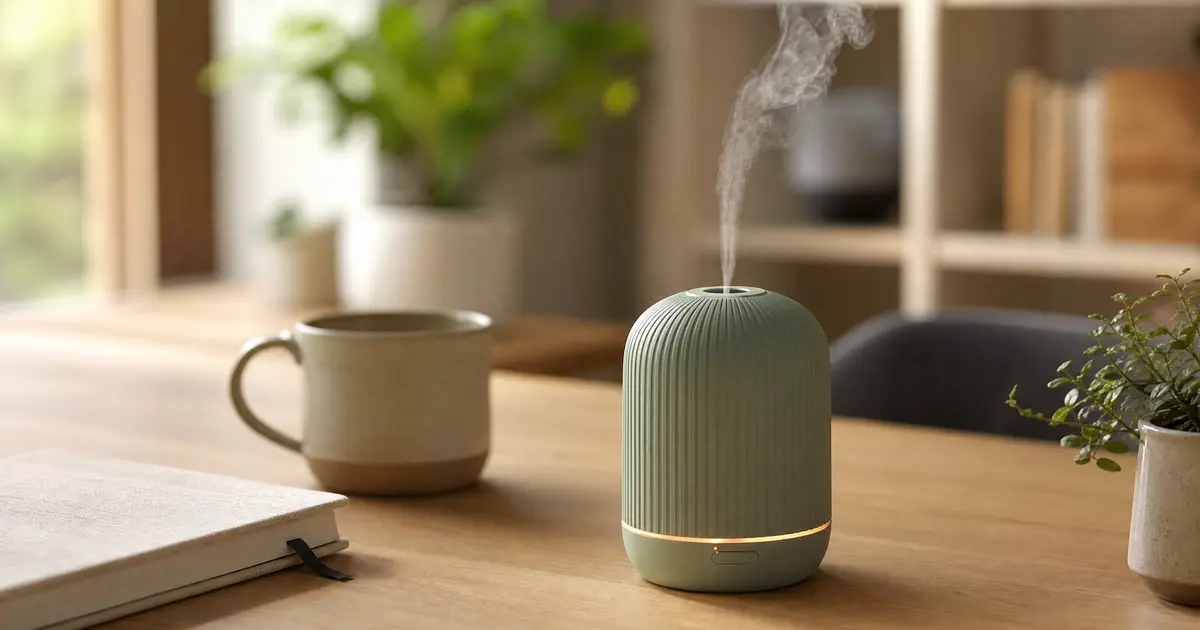
The Electric Scent Diffuser: Why UAE Homes and Businesses Are Making the Switch in 2026
There is a particular moment I have come to recognize after spending over a decade observing how fragrance shapes interiors across the Emirates. You walk into a space a hotel lobby on Sheikh Zayed Road, a private majlis in Jumeirah, a wellness clinic in Abu Dhabi’s Al Maryah Island and before the marble, before the lighting design, before the art on the walls registers, the scent reaches you first. It feels deliberate, never cloying. Nine times out of ten, an electric scent diffuser is the quiet mechanism behind that experience.
For a region where fragrance is not decoration but identity woven into hospitality rituals, family gatherings, and daily rhythms the shift toward electric diffusion technology represents something meaningful. Bakhoor and traditional incense hold their place, but alongside them has grown a demand for consistency, control, and scent fidelity that only modern electric aroma diffusion can deliver.
I have tested diffusers across price points, spoken with facilities managers who run commercial scenting systems across hotel groups, and watched the UAE market mature from novelty plug-ins to sophisticated cold-air nebulisation technology. This guide draws on that hands-on experience what works, what disappoints, and what genuinely transforms a space.
What an Electric Scent Diffuser Actually Does
The terminology can confuse. Walk through any home goods section and you will find ultrasonic misters labeled as diffusers, reed sets in glass bottles, and plug-in warmers all grouped under the same broad category. An electric scent diffuser in the professional sense is a more specific piece of equipment.
True electric aroma diffusers use cold-air nebulisation. This technology pressurizes air and passes it over pure fragrance oil, breaking it into microscopic particles small enough to remain suspended in the air for extended periods . The key distinction: no water, no heat, no dilution.
This matters enormously for scent quality. Quality fragrance oils particularly the complex compositions common in the UAE market contain a top note that greets you initially, a middle note that forms the scent’s character, and a base note that anchors the composition. Heat collapses these layers, which is why the same oud oil diffused through cold-air nebulisation smells markedly different and more complete than when warmed in a traditional burner .
The distinction is practical, not academic. If you invest in a carefully blended oud or proprietary signature scent for your business, running it through a heat-based or water-dilution system degrades what you paid for.
Why UAE Consumers Are Moving Beyond Reed Diffusers and Candles
The UAE home fragrance market was valued at approximately USD 775.89 million in 2024 and is projected to reach USD 1,789.52 million by 2033, growing at a compound annual rate of 9.8 percent . Within that expansion, electric diffusers are identified as the fastest-growing product segment a shift I have watched accelerate particularly since 2024 .
Several factors explain the migration, and having advised both homeowners and commercial clients through these decisions, I can identify the practical logic behind each:
Control over intensity. Reed diffusers are passive, they release what they release, affected by humidity and airflow in ways you cannot calibrate. Candles offer ambiance but introduce flame concerns and inconsistent scent throw. An electric scent diffuser lets you set specific intensity levels, adjust for room occupancy changes, and schedule intervals. For a villa with open-plan living areas that transition from quiet mornings to evening gatherings, this flexibility is transformative .
Consistency across seasons. The UAE’s extreme summer means sealed, air-conditioned environments for months. In that closed-loop air, heavy synthetic scents become oppressive quickly. Cold-air diffusion with pure oils maintains a clean, consistent presence without the chemical undertone some cheaper plug-ins produce.
Safety and peace of mind. No open flame, no hot wax, no heated surfaces. For families with children, pets, or for commercial environments where fire risk is a legitimate operational concern, this is not a minor advantage.
Coverage for scale. A quality electric diffuser can cover 1,200 cubic meters or more through a single unit and can integrate directly with HVAC ducting for whole-building scent distribution . This makes it viable for hotel lobbies, retail floors, and large villas in a way reed diffusers and candles cannot match.
The UAE Scent Culture Factor
General fragrance advice translates poorly to this market. The UAE’s relationship with scent is culturally embedded in ways that influence product preferences, oil selection, and usage patterns.
The air freshener market here divides along interesting lines. Emirati households gravitate toward traditional and luxurious profiles oud, amber, frankincense, sandalwood while the expatriate population drives demand for lighter citrus, marine, and aromatherapy-oriented blends . The best-selling oils in electric diffusers for this market bridge both: genuine oud softened with floral notes for daily use, heavier frankincense-honey compositions for evenings and gatherings, and clean citrus blends for professional environments.
Oud deserves particular attention because it exposes the difference between diffusion technologies so clearly. Authentic oud oil carries significant base-note weight the deep, resonant part of the scent that gives it presence and longevity. Water-based ultrasonic diffusers cannot properly atomize these heavier oils; the result is a thin version of what you paid for. Cold-air nebulisation preserves the full profile, from the sharp bergamot opening through the agarwood base .
For businesses, the cultural dimension extends further. Signature scenting, where a hotel, retail brand, or clinic develops a proprietary fragrance diffused consistently across locations has become a branding strategy. In the UAE’s competitive hospitality market, where service standards are exceptionally high, ambient scenting is no longer a differentiator so much as an expectation .
Smart Technology: Where Electric Scent Diffusers Are Heading in 2026
The integration of electric scent diffusers with IoT and app-based control systems has accelerated faster than many expected. Current smart diffusers offer Bluetooth or WiFi connectivity, scheduling through smartphone apps, intensity adjustment without physical contact with the unit, and in more advanced models AI-driven scent adjustments based on time of day, occupancy sensors, or environmental data .
For the UAE specifically, where smart home adoption is among the highest globally and luxury consumers expect integrated technology, these features carry weight. A diffuser that pairs with home automation systems, runs at under 34 decibels (quieter than most AC units already humming in the background), and can be programmed for different scent zones throughout a villa this is no longer speculative. It is available now .
Sustainability considerations are also shaping product development. Refillable oil cartridges, recyclable packaging, low-VOC formulations, and energy-efficient operation now influence purchasing decisions among the environmentally conscious segment . This aligns with broader UAE sustainability initiatives and resonates particularly with younger demographics.
Choosing the Right Electric Scent Diffuser: A Room-by-Room Framework
After testing and configuring diffusers across residential and commercial environments, I have developed a practical framework that prioritizes coverage mathematics over aesthetics.
Start with cubic meters, not square meters. Volume, not floor area, determines how fragrance disperses. A room with high ceilings contains significantly more air to scent than a standard apartment living room. Measure length × width × ceiling height to get the cubic meter figure, then match it to the manufacturer’s stated coverage .
For smaller rooms, bedrooms, studies, walk-in wardrobes compact wall-mounted or tabletop units with 10 adjustable intensity levels provide proportionate coverage without overwhelming the space. Battery operation adds placement flexibility. Start at roughly 30-40 percent intensity and adjust over several days of use .
For open-plan living and majlis areas look for units covering 1,200 cubic meters or more with multi-vent distribution. A 500 ml oil bottle at five hours of daily use on moderate intensity should last 50 to 60 days a reasonable operating cost baseline for residential budgeting .
For commercial application the calculation is the same but the stakes are different for the business. Hotels, retail floors, and clinic receptions need even distribution without dead zones. For anything exceeding 3,000 cubic meters, HVAC integration often makes more sense than standalone units. The existing air conditioning system already moving air through every room and corridor becomes the fragrance delivery network .
Oil selection by space type: Arabic oud for residential warmth, lighter citrus or clean floral for professional and shared environments, sandalwood or grounding blends for wellness and meditation spaces. The machine is only half the equation an electric scent diffuser performs exactly as well as the oil running through it .
Avoiding Common Mistakes
Experience teaches what specifications sheets do not. The most frequent errors I see:
Starting at too high an intensity. An empty room and a full room are fundamentally different scent environments. Body heat, soft furnishings, and humidity all affect how fragrance registers. What feels barely perceptible when setting up will feel notably stronger once the room fills. Start low around 30 percent of maximum output and live with it before adjusting .
Running continuously. Continuous diffusion leads to olfactory fatigue your nose stops registering the scent entirely while visitors walk into a wall of fragrance. Interval scheduling (30-45 minutes on, 30 minutes off) keeps the scent feeling fresh and extends oil life significantly .
Using the wrong oil for the technology. Not all fragrance oils are formulated for cold-air nebulisation. Oils designed for water-based ultrasonic diffusers or reed systems may not atomize properly. Confirm your oil supplier formulates specifically for the diffusion technology your machine uses .
Ignoring maintenance. Cold-air diffusers require periodic cleaning of the atomizer and air pump filter. Neglected units deliver inconsistent output and eventually clog. The maintenance burden is modest but real factor it in.
What the Numbers Tell Us About the UAE Market
The data supports what anecdotal observation suggests. Within the broader UAE air freshener market projected to grow at over 6.77 percent CAGR through 2031 electric and smart air freshening devices rank among the fastest-expanding categories . This growth correlates with increased disposable income, the premium lifestyle culture, and the country’s position as a hospitality and wellness hub .
Distribution channels reflect how consumers discover and purchase these products. While supermarkets and hypermarkets like Carrefour, Lulu, and Spinneys carry entry-level options, specialty home stores and online platforms capture the mid-range to premium electric diffuser segment . E-commerce has grown particularly fast, driven by the UAE’s high digital penetration and mobile-first shopping behavior. For consumers researching electric scent diffusers, online channels offer access to detailed specifications, comparison data, and brands not always stocked on physical shelves.
The commercial B2B sector hotels, malls, corporate offices, spas forms a significant demand driver that shapes product development upstream. Features developed for commercial applications (HVAC integration, centralized control, high-coverage output) eventually filter down to premium residential products, benefiting home users who want professional-grade performance .
Certification and Compliance in the UAE
Any electric appliance sold in the UAE must comply with ESMA (Emirates Authority for Standardization and Metrology) regulations, including ECAS certification for electronic products . This ensures safety standards, electromagnetic compatibility, and energy efficiency requirements are met. For consumers purchasing electric scent diffusers, ECAS certification provides assurance that the unit meets UAE safety and quality benchmarks.
While fragrance oils themselves fall under different cosmetic and chemical regulations, the diffuser hardware operates in the same regulatory category as other household electrical appliances entering the UAE market . Reputable brands serving the UAE market will have this certification in place it is worth confirming before purchasing, particularly for online orders shipped from outside the country.
The Practical Conclusion
The electric scent diffuser category has matured beyond gadget status. For UAE homes, it represents the most controllable, consistent method of ambient scenting available preserving the integrity of quality oils while offering scheduling, intensity control, and coverage appropriate to the scale of local residences. For businesses operating in a market where sensory experience affects brand perception and customer dwell time, it has shifted from optional to expected.
The key decisions come down to coverage mathematics, diffusion technology (cold-air nebulisation consistently outperforms water-based alternatives for the oils popular in this region), and matching the oil to both the machine and the environment. Get those fundamentals right, and the diffuser becomes one of those rare products that genuinely delivers what it promises: a space that smells exactly as you intend, exactly when you want it to.
For those ready to explore specific recommendations, have your room dimensions in cubic meters prepared. It makes the difference between a recommendation based on marketing claims and one based on what will actually work.