
Scent Blog
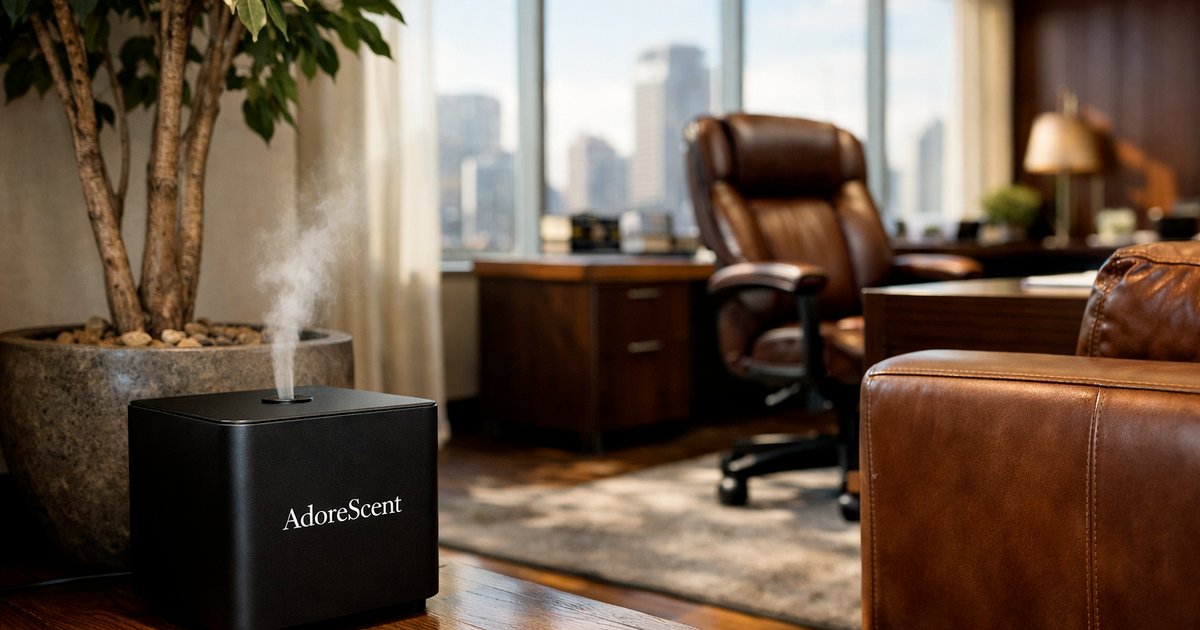
Rethinking the Nine to Five: Why Your Workspace Needs a Scent Strategy, Aroma Diffuser for Office
There is a quiet shift happening in modern workspaces, one that you cannot see but can almost certainly feel. Beyond the adjustable standing desks, the dual monitors, and the curated playlists of lo-fi beats, a new layer of environmental design is taking root. It enters through the nose, bypasses the usual critical filters of the brain, and settles directly into the limbic system the ancient core where memory, emotion, and motivation intertwine. We are talking, of course, about the strategic use of fragrance in professional settings. For years, we focused on eliminating bad smells: the stale coffee, the recycled air, the lingering hint of last night’s takeout. But today, forward-thinking professionals are moving beyond mere odor neutralization. They are asking a different question: what should productivity smell like?
The answer often leads to a small, unassuming device that has become the silent partner in thousands of successful home offices and corporate hubs. That device is an aroma diffuser for office environments. Unlike the aggressive chemical sprays of the past or the wax melts that feel a little too domestic, this tool offers a calibrated, gentle, and profoundly psychological way to reshape the atmosphere of a room. But to understand why this particular tool is gaining traction, we must first look at what the research says about the nose at work.
The Science of Scent and the Working Brain
To dismiss fragrance as merely cosmetic is to misunderstand human physiology. The olfactory system is the only one of the five senses that connects directly to the hippocampus and the amygdale the brain regions responsible for memory and emotion without first being filtered by the thalamus. In practical terms, this means a scent hits your emotional core before you have even consciously registered it.
A study published in the International Journal of Neuroscience found that exposure to certain essential oils, specifically rosemary and peppermint, significantly enhanced memory performance and alertness in adult subjects. The researchers noted that “the olfactory stimulation induced changes in brain wave activity that correlated with faster reaction times and improved information retention” (Moss, M., et al., 2003, International Journal of Neuroscience). This is not aromatherapy as a spiritual concept; it is neurology. If a whiff of rosemary can sharpen recall during a high stakes presentation, imagine what a consistent, low level of a focus oriented blend could do over an eight hour workday. This is the core value proposition of an aroma diffuser for office use: it turns the abstract idea of “focus” into a breathable, measurable atmospheric condition.
Yet, many professionals remain skeptical. They worry about distraction, about overwhelming colleagues, or about crossing the line from professional to “spa day.” These are valid concerns. The key difference between a therapeutic intervention and a headache is dosage. Unlike incense or scented candles, which burn unevenly and release particulate matter, a cold air diffuser uses ultrasonic vibrations to break water and oil into a fine, dry mist. This results in a subtle, fluctuating scent that integrates into the ambient air rather than assaulting the senses. When you deploy an aroma diffuser for office settings, you are not creating a perfume cloud; you are creating a gentle atmospheric baseline.
Navigating the Open Plan: Scent as a Privacy Screen
One of the greatest complaints in contemporary office design is the lack of auditory privacy. We have all been there: trying to reconcile a spreadsheet while three desks away, a coworker discusses their weekend in excruciating detail. Sound masking has become a popular solution, but it only addresses one sense. Scent masking, or more accurately, scent framing, offers a complementary strategy.
A well placed aroma diffuser for office use can serve as a psychological boundary. In open plan environments, the introduction of a clean, linear fragrance think hinoki wood, white tea, or subtle eucalyptus signals to the brain that you have entered a distinct zone. It is a non visual partition. Researchers have long studied the concept of “territoriality” in workspaces. According to a 2019 paper in the Journal of Environmental Psychology, individuals who had control over a single sensory element in their workspace (such as lighting or scent) reported a thirty percent lower rate of cognitive fatigue by the end of the workweek. The conclusion was that sensory agency reduces the feeling of being a passive occupant in a corporate machine.
This is where the choice of device matters. A high quality aroma diffuser for office desks does not need to be large or loud. In fact, the best models are the quiet ones those that run on intermittent cycles, releasing a brief puff of scented air every ten or fifteen minutes. This cadence is crucial. Continuous diffusion can lead to olfactory fatigue, where the nose essentially turns off its receptors to a constant stimulus. Intermittent diffusion, however, keeps the olfactory nerves surprised and engaged. It is the difference between living next to a bakery (you stop smelling the bread after an hour) and walking past a bakery once an hour (you smell the bread every single time).
Choosing the Right Oil for the Task at Hand
The hardware is only half the equation. The oil you choose determines the outcome. If you place an aroma diffuser for office use and fill it with a heavy vanilla or a sweet berry blend, you will likely get the opposite of the intended effect. Heavy, sweet, or creamy fragrances tend to activate the parasympathetic nervous system the “rest and digest” mode. That is wonderful for a yoga studio or a bedroom, but disastrous for a Monday morning deadline.
For cognitive work, the evidence points toward the citrus and mint families. Lemon essential oil, for instance, has been studied for its effects on mood and performance. A research team at the University of Vienna found that the scent of lemon significantly increased the concentration of norepinephrine in the brain, a neurotransmitter associated with alertness and attention. They reported that “the presence of lemon oil in the ambient air led to a notable reduction in typing errors and an increase in task engagement” (Lehrner, J., et al., 2000, Physiology & Behavior). This is a direct, replicable outcome. An aroma diffuser for office use with lemon oil is not a luxury; it is a performance tool.
Peppermint is another champion of the professional sphere. It cools the trigeminal nerve, creating a sensation of breathability and clarity. However, caution is required. Peppermint is potent. A single drop too many can shift from clarifying to irritating. The rule of thumb for a professional setting is always “less is more.” You want your colleague to feel vaguely sharper, not like they have been chewing gum in a blizzard. When you operate an aroma diffuser for office shared spaces, start with half the recommended oil quantity. Run it for fifteen minutes, then turn it off. Wait an hour. Assess the mood. Scent is a conversation, not a command.
The Afternoon Slump: A Chemical Problem
Anyone who has worked a standard office shift knows the three PM wall. It is a distinct biochemical event: blood sugar dips, adenosine builds up, and the eyes start to feel heavy. Most people reach for caffeine, which works but comes with a jittery crash. A few reach for a sugar snack, which is even worse. But what if the solution was in the air?
A lesser known but highly effective application of an aroma diffuser for office environments is combating the afternoon slump with grapefruit or basil essential oil. Basil, specifically, has a unique chemical constituent called linalool, which has been shown to reduce cortisol levels without inducing sedation. In a study conducted by the Mie University School of Medicine in Japan, workers exposed to basil oil vapor for twenty minutes in the afternoon showed a twenty six percent reduction in reported feelings of “mental exhaustion” compared to a control group. The researchers noted that “the olfactory intervention provided a non pharmacological bridge through the post lunch dip” (Tanida, M., et al., 2005, Journal of the Autonomic Nervous System).
Integrating this into your workflow is simple. Set a silent alarm on your phone for two thirty PM. Run your aroma diffuser for office for just twenty minutes with a blend of two drops of basil and one drop of spearmint. Do not announce it. Do not make a ritual of it. Just let the machine do its work. You will likely notice, about ten minutes in, that the spreadsheet you were dreading feels slightly less insurmountable. The cursor stops blinking at you mockingly. This is the quiet magic of biophilic design: bringing the adaptive properties of plants and herbs into the sterile air of human infrastructure.
Avoiding the Pitfalls: The Social Etiquette of Scent
Of course, no article about an aroma diffuser for office would be complete without addressing the elephant in the room: scent sensitivity. It is estimated that nearly thirty percent of the population identifies as having some level of chemical sensitivity. For a small percentage, certain essential oils can trigger migraines, respiratory irritation, or nausea. This does not mean you should abandon the idea of scent in the workplace. It means you need to adopt a protocol of consent and transparency.
The professional approach is to treat your diffuser like you treat your music. If you wear headphones, no one can hear your playlist. But if you play it out loud, you are imposing your taste on others. Scent travels. It goes under doors and through vents. Before you install any aroma diffuser for office common areas, have a conversation. Send a simple email: “I’d like to experiment with a very mild citrus diffuser in our corner of the room to help with focus. Please let me know if you have any sensitivities.” You will find that most people are curious rather than hostile. Offer veto power. If one person says no, switch to a personal desktop unit that uses a fan to blow a tiny amount of scented air toward you alone, rather than atomizing it into the whole room.
Also, avoid the trap of “therapeutic claims.” Never tell a coworker that your diffuser will cure their anxiety or fix their sleep. That veers into unlicensed medical advice and creates awkwardness. Instead, speak in the language of preference. “I find this helps me concentrate” is defensible. “This will heal your chakras” is not. A responsible aroma diffuser for office use respects the boundary between personal enhancement and shared environment.
The Hardware Guide: What to Look For
Not all diffusers are created equal, and the wrong choice can lead to puddles on your desk, loud buzzing, or burned out motors. When selecting an aroma diffuser for office purposes, prioritize three things: water capacity, timer functions, and LED override. Water capacity matters because a tiny two hundred milliliter tank might run for only three hours. You want a four hundred to five hundred milliliter tank that can run for ten to twelve hours on an intermittent setting. This allows you to fill it once in the morning and forget it.
Timer functions are non negotiable. You do not want to remember to turn the device off. You want to set it to run for ninety minutes, then pause for sixty, then run again. This cycling prevents olfactory fatigue and conserves oil. The LED override is surprisingly critical. Many diffusers come with colored lights that cycle through the rainbow. In a professional environment, this looks juvenile. It suggests a dorm room, not a boardroom. You need a diffuser that allows you to turn the lights completely off. The best aroma diffuser for office desks is one that becomes invisible a silent, dark cylinder that produces only a faint wisp of vapor and a subtle shift in the quality of the air.
Wooden diffusers are often better than plastic ones for office environments because wood absorbs excess moisture and does not develop that musty, stale water smell that plastic tanks get after a week. If you do buy plastic, wash it with white vinegar once a week. A dirty diffuser will blow mold spores into the air, which is the exact opposite of the healthy environment you are trying to create.
A Day in the Life of a Scent Enhanced Workspace
Let us walk through a hypothetical day to illustrate the cumulative effect. It is eight forty five AM. You arrive at your desk, pour a glass of water, and activate your aroma diffuser for office with a blend of two drops of rosemary and one drop of lemon. The first fifteen minutes of the day are for planning. The rosemary sharpens your working memory. You move through your inbox with a sense of clinical detachment, flagging only what matters. By nine thirty, the diffuser cycles off. The air is clean. You do not notice the scent anymore, but your brain is primed.
Ten thirty AM. You have a video call with a difficult client. You manually turn on the diffuser for ten minutes before the call, this time with a single drop of frankincense. Frankincense has been studied for its ability to lower heart rate variability and induce a state of grounded alertness. You go into the call calm, responsive, unflappable. The client hangs up feeling heard. You feel competent. Correlation or causation? It does not matter. The ritual itself creates a psychological trigger: the scent means business.
Two PM. The slump arrives. You run the aroma diffuser for office again, but now with the grapefruit basil blend. You do not reach for the candy jar. You do not doom scroll. You just breathe. By two thirty, the fog lifts enough to tackle the quarterly report. You finish at four fifteen, earlier than expected. You realize you have not felt the usual urge to flee the building at five o’clock. Your energy has been steady, not spiky. This is the promise of olfactory environmental design: not superhuman productivity, but simply a reduction of friction.
The Verdict: Is It Worth It?
Adding an aroma diffuser for office setup is not an expense; it is an investment in cognitive comfort. The average cost of a quality ultrasonic diffuser is roughly the same as two weeks of artisanal coffee. The oils, when bought in therapeutic grade, cost pennies per use. Yet the return measured in reduced stress, improved concentration, and a more pleasant social atmosphere is significant.
We are animals, despite our suits and spreadsheets. We respond to the quality of the air, the texture of the light, the frequency of the sounds around us. For decades, we have tried to optimize the visual and auditory channels of the office. We bought ergonomic chairs and noise canceling headphones. We painted walls in calming blues and energizing yellows. But we left the nose out of the conversation. That was a mistake.
The olfactory channel is the fastest route to the emotional brain. It bypasses logic. It speaks directly to the ancient part of us that decides whether a place is safe, whether a task is urgent, whether we are welcome. By deliberately, gently, and respectfully introducing a clean, functional fragrance into your work environment, you are not being “woo woo.” You are being strategic. You are recognizing that humans are whole beings, not just eyes and ears attached to a typing device.
So, go ahead. Choose your device. Select your oil. Ask your neighbors for their blessing. Then fill the tank, press the button, and take a deep breath. The future of work smells faintly of lemon and rosemary. And that is a future worth breathing in.