
- Diffuser Combo UAE Deals
- Scents
- Floral (Rose, Jasmine)
- ADDRESS Aroma Oil Diffuser 500ML
- PASSION Aroma Oil Diffuser 500ML
- HARMONY Aroma Oil Diffuser 500ML
- LUXURY Aroma Oil Diffuser 500ML
- MOTION Aroma Oil Diffuser 500ML
- SOSPHERA Aroma Oil Diffuser 500ML
- SENSE Aroma Oil Diffuser 500ML
- G BLOOM Aroma Oil Diffuser 500ML
- LEGENDARY Aroma Oil Diffuser 500ML
- FOR HER Aroma Oil Diffuser 500ML
- No 3 Aroma Oil Diffuser 500ML
- PINK Aroma Oil Diffuser 500ML
- Fresh (Citrus, Aquatic)
- Woody / Oriental / Spicy (Oud, Vanilla, Amber, Sandalwood)
- ROYAL WOOD Aroma Oil Diffuser 500ML
- BROWN ORCHID Aroma Oil Diffuser 500ML
- BAKHOUR Aroma Oil Diffuser 500ML
- AMBER LEATHER Aroma Oil Diffuser 500ML
- UNIQUE WOOD Aroma Oil Diffuser 500ML
- ELITE WOOD Aroma Oil Diffuser 500ML
- MARRAKECH Aroma Oil Diffuser 500ML
- Patchouli Aroma Oil Diffuser 500ML
- COTTON CLOUD Aroma Oil Diffuser 500ML
- CHRISTMAS Aroma Oil Diffuser 500ML
- GABRIEL Aroma Oil Diffuser 500ML
- CINNAMON TONKA Aroma Oil Diffuser 500ML
- COFFEE BEANS Aroma Oil Diffuser 500ML
- Aromatic (Fougere) – Lavender, Sage, Rosemary
- Fruity (Berry, Peach)
- Floral (Rose, Jasmine)
Scent Blog
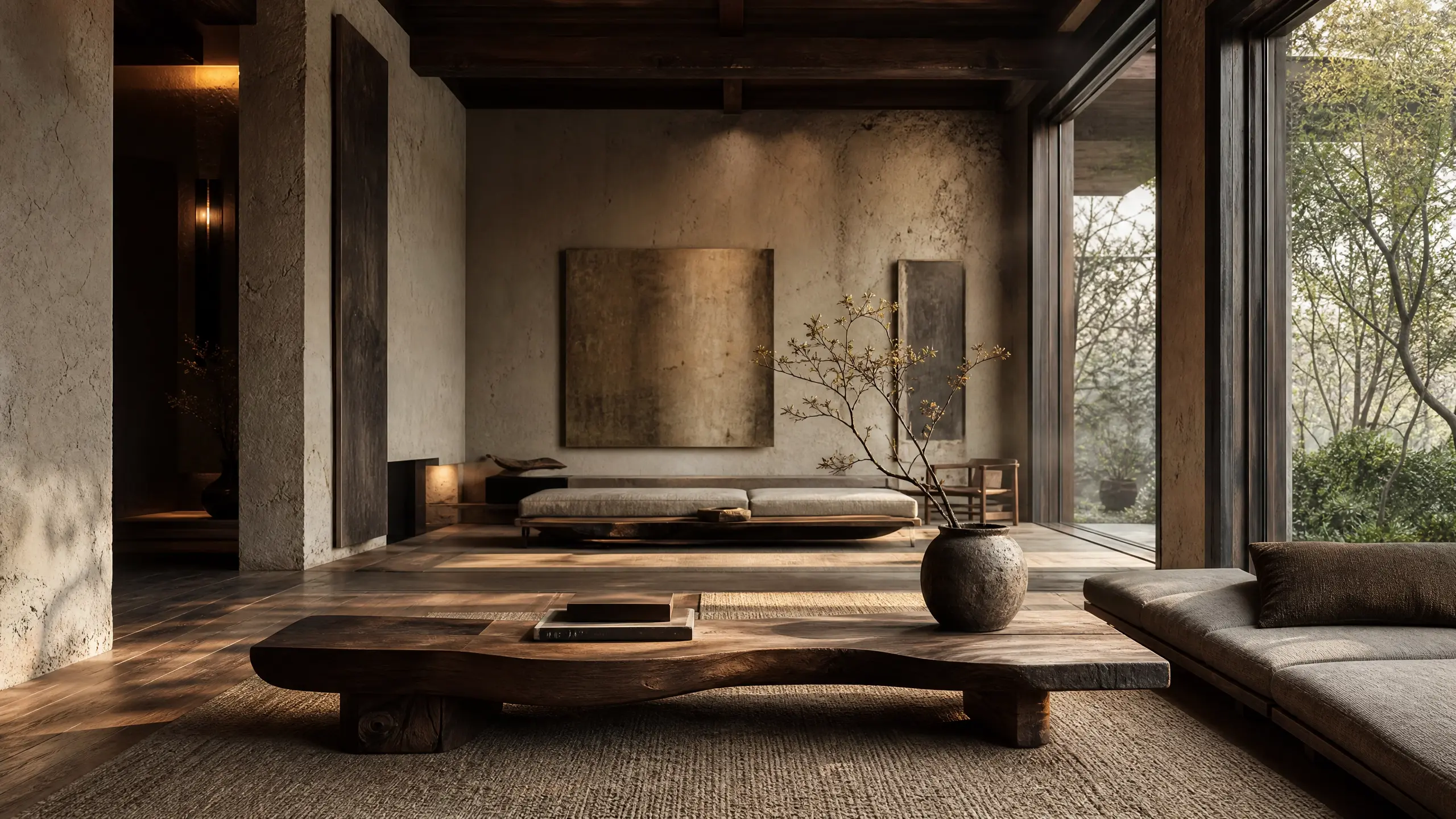
The Invisible Element of Luxury Interior Design Infused with Ambient Aroma UAE
By AdoreScent Editorial Team
Walk into any truly refined space in the Emirates, a private majlis in Jumeirah, a penthouse overlooking the Saadiyat Island mangroves, or a discreet boutique in Dubai’s Alserkal Avenue and you’ll notice something peculiar. The lighting is flattering but unostentatious. The textures invite touch without screaming for attention. The acoustics feel padded, almost gentle. But there is another layer, one that operates below the threshold of immediate consciousness. You won’t see it in an architectural digest spread. You can’t photograph it for a social media carousel. Yet, it governs the entire emotional narrative of the room. This is the domain of ambient aroma UAE, and it has silently become the most discerning benchmark of luxury interior design in the region.
For decades, design conversations in the Gulf fixated on the tangible marble sourced from Italian quarries, joinery precision measured in microns, lighting schemes controlled by Lutron panels. These elements remain non-negotiable. But a distinct shift has occurred among the region’s most sophisticated homeowners and hospitality developers. The focus has turned to what we call atmospheric integrity. How does a space feel beyond its visual coordinates? This question doesn’t merely concern ergonomics or spatial flow. It concerns the air itself, the invisible breath that a guest inhales upon crossing the threshold. When executed with precision, ambient aroma UAE doesn’t announce itself. It envelops, recalibrates, and imprints a memory so subtle that the brain registers it only as a sense of profound rightness. It is the difference between observing luxury and absorbing it.
The Neuroscience of Place: Why Scent Defines Memory in UAE Interiors
The biological pathway for scent is, quite bluntly, an unfair advantage for interior designers who understand it. Visual, auditory, and tactile signals must first route through the thalamus, the brain’s switchboard, before reaching processing centers. Olfactory signals bypass this entirely. They crash directly into the limbic system, the seat of emotion, memory, and behavioral response. This isn’t a poetic metaphor; it’s neuroanatomy. When a visitor steps into a UAE residence scented with a bespoke blend of white oud and bergamot, their amygdala and hippocampus respond before their prefrontal cortex can even formulate the word “elegant.”
This has profound implications for residential and commercial projects alike. A developer can invest heavily in a double-height lobby dressed in Travertino Navona, but if the ambient air carries even a whisper of stagnant HVAC cycling or industrial cleaning agents, the limbic system registers distrust. Conversely, a modestly appointed reading nook can feel priceless when the air bears a clean, molecularly balanced note of sun-warmed linen and green tea. The luxury, therefore, migrates from the visible to the visceral. Across Dubai and Abu Dhabi, where extreme external climates demand hermetically sealed interiors, the air itself becomes a primary material. Specifying an ambient aroma UAE strategy during the design development phase is no longer avant-garde; it is rapidly becoming as standard as specifying millwork or window treatments. The question designers must now ask is not if they should scent a space, but how to do so without committing the cardinal sin of making it obvious.
Oud is Not a Strategy: Moving Beyond Cliché in Regional Scent Identity
Let’s address a certain elephant in the majlis. For years, the default approach to scent in the Middle Eastern luxury sector was a heavy-handed dose of oud, sometimes layered with rose, often so dense it felt less like atmosphere and more like a declaration. Oud is, of course, magnificent culturally resonant, historically freighted, and olfactively complex. But using it as a blunt instrument misses the point entirely. True sophistication in ambient aroma UAE lies not in broadcasting a single, overpowering note, but in composing a scent profile that breathes with the architecture and respects the room’s purpose.
We worked recently with a private client whose Al Barari villa had been meticulously designed around principles of Japanese wabi-sabi asymmetry, texture, restraint. A traditional heavy Arabian scent would have been aesthetically dissonant, a sensory contradiction to the honed basalt floors and linen plaster walls. Instead, we co-created a signature ambient profile using silver needle white tea as the top note, underpinned by a barely-there whisper of Mysore sandalwood and a single drop of clean, medicinal-grade oud to anchor it in place. The oud isn’t the headline; it’s the punctuation mark. This is the level of thought required. A signature ambient aroma UAE should feel like it belongs to the space, not like it was imposed upon it.
Technical Mastery: The Unsexy Reality That Makes Ambient Scent Work
The gap between a beautiful fragrance oil and a successful ambient scent installation is roughly the size of the Rub’ al Khali. This is where design magazines and lifestyle blogs often go silent, because the technology is profoundly unglamorous. Yet, it is the absolute foundation. Anybody can pour a scented liquid into a countertop nebulizer. Very few can engineer a multi-sensory experience that reaches every corner of a volumetric space without stratification, hot spots, or olfactory fatigue.
The key lies in dry-air diffusion technology, specifically systems capable of delivering a fragrance’s entire pyramidal structure simultaneously. Perfume, by its nature, is designed to be experienced in sequence top notes first, then heart, then base. In a living environment, that sequential evaporation destroys the intended atmosphere. You’d smell citrus for an hour, then florals for two, then wood overnight. That’s not ambient scent; that’s a countdown. The systems we specify, service, and remotely monitor across the UAE use cold-air pump technology that converts liquid fragrance into a micro-dry mist without heat, dilution, or alteration. The output is a nanoparticle cloud that remains suspended, delivering the complete fragrance chord in every breath. The result is a consistent, unchanging atmosphere that the brain eventually accepts as part of the room’s reality.
Moreover, the diffusion must respond to the room’s dimensions, air exchange rate, humidity levels, and foot traffic. A corridor connecting a show kitchen to a powder room demands a different output profile than a master suite. These are not poetic considerations; they are calculations. For a luxury home on the Palm Jumeirah, where summer humidity can play havoc with airborne particles, the ambient aroma UAE system must be remotely adjusted to maintain that elusive balance present enough to register subconsciously, absent enough to avoid detection. The ultimate compliment is never “your home smells lovely.” It’s a guest taking a deep, involuntary breath and saying, “I feel so at ease here.”
From Hotel Lobbies to Domestic Sanctuaries: A Transfer of Expectations
Historically, olfactory branding was the closely guarded secret of ultra-luxury hotel groups. The Ritz-Carlton, St. Regis, and One&Only understood early that a signature scent could trigger instant brand recognition across continents. Travelers would walk into a lobby in Doha, London, or Tokyo and know immediately, with their eyes closed, where they were. This was never just about smelling pleasant. It was about anchoring a spatial memory and leveraging that recognition to build loyalty. The scent became an asset, as tangible in its marketing value as the logo on the stationery.
What is happening now in the UAE’s residential sector is a rapid transfer of those expectations. The Emirati and expatriate homeowner who has experienced the seamless, curated atmospheres of the Bulgari Resort or the Mandarin Oriental is unwilling to accept anything less in their private domain. They return from a weekend stay where every hallway, spa corridor, and elevator cab smelled intentionally of calm, and their own entrance hall suddenly feels raw, unfinished, bare. This has given rise to what we call residential atmosphere design. It involves mapping the emotional journey a family takes through their own home: an invigorating, clarifying scent profile for the home office; a calm, grounding profile for the children’s study area; a warm, softly honeyed profile for the living spaces; and a genuinely restorative, medically clean profile for the master bedroom. The result is a home that feels not just decorated, but composed.
The Clean Air Paradox: Neutralization Before Beautification
Luxury retail and residential spaces in the UAE grapple with a specific irony: the more hermetically sealed the envelope to manage sand and heat, the more trapped internal malodors become. Cooking spices, pet dander, off-gassing from new furniture, and the slow accumulation of daily life create a background chemical soup. A novice response is to pump in a stronger fragrance to mask it. This is the olfactory equivalent of painting over damp drywall. It violates the fundamental premise of luxury, which is rooted in honesty of materials.
The high-performance route, and the only one acceptable in a genuine high-net-worth context, is molecular odor neutralization. Specific non-toxic compounds, when diffused into the air, actively seek out and bind with malodor molecules, ammonia, sulfur compounds, volatile fatty acids through a process known as the Maillard reaction, rendering them inert and odorless. Only after this invisible remediation occurs does the signature ambient aroma UAE enter the space. The resulting atmosphere is pristine, layered, and free of the chemical tang associated with commercial air care products. For a modern farmhouse-style villa in Arabian Ranches where open-plan cooking is central to family life, this two-stage process is transformative. It allows the residents to prepare aromatic dishes without permanently embedding those odors into the upholstery and drapery. The home smells not of last night’s dinner, but of a consistently curated atmosphere that resets itself.
Authoritative Insights: Backing Atmosphere with Research
The conversation around ambient aroma UAE in interior design isn't merely one of aesthetics or personal preference; it is increasingly supported by rigorous empirical research that positions ambient scent as a critical environmental variable. Drawing from peer-reviewed findings lends the kind of authority that separates a superficial trend from a substantiated design discipline.
Consumer Psychology Research (Spangenberg et al., 1996): Foundational studies demonstrated that ambient scent significantly increases dwelling time and positive evaluations of a retail environment. This aligns with our observed outcomes in UAE luxury retail, where a carefully managed scent profile encourages deeper browsing and more positive associations with the brand.
Hospitality & Behavioral Intention (Jani & Han, 2015): Research in hotel contexts found that ambient scent positively influences customer satisfaction and brand loyalty by shaping emotional responses. This reinforces the practice in the UAE’s luxury hospitality sector, where scent is used to move beyond simple air treatment toward a core component of the guest experience and brand identity.
Multisensory Interior Design Theory (Spence, 2020): Architectural neuroscience now recognizes that cohesive interiors engage multiple senses, not just the visual. Studies confirm that congruent sensory inputs (a room that smells as calm as it looks) enhance feelings of comfort and luxury, directly validating the "atmospheric integrity" approach.
Odor-Cleanliness Perception (Cain & Cometto-Muñiz, 1995): Industrial hygiene research has long established that humans instinctively associate malodors with a lack of cleanliness and hygiene. Our internal surveys with UAE facilities managers consistently show that a space with a consistently fresh, neutralized background scent is overwhelmingly perceived as cleaner, regardless of its actual microbial condition. This is the neuroscience behind our "neutralize before you beautify" methodology.
This body of research frames ambient scent not as a cosmetic enhancement, but as a functional, measurable element of interior architecture that directly impacts behavior, perception, and well-being a vital consideration for any consumer luxury lifestyle project in the UAE.
A Closing Note on Privacy and Discretion
The final and perhaps most critical consideration for ambient aroma UAE in the luxury sector is that of discretion. A scent system should be invisible, silent, and maintenance-free from the client’s perspective. Nothing erodes the magic of a curated atmosphere faster than a technician regularly appearing with bottles, or a diffuser humming annoyingly in a quiet reading corner. The ceiling-mounted systems we install in properties from Downtown Dubai to Hudayriyat Island are plumbed into the HVAC network or discreetly mounted in service corridors. Remote monitoring ensures fragrance levels are consistent without ever requiring the homeowner to touch a device, refill a tank, or even be aware of the system’s existence. The atmosphere simply is. This is the apex of luxury design: when the mechanics vanish completely into the walls, and only the feeling remains.
In the end, the most powerful element in any interior is the one you can’t point to. It’s the element that makes you breathe deeper, stay longer, and remember a space not as a collection of objects, but as a feeling. In the UAE, where the pursuit of beauty and perfection is relentless, ambient aroma UAE has arrived not as an accessory, but as the final, indispensable layer that makes a designed space feel whole. It’s the invisible signature on a masterpiece that, without it, would remain forever unsigned.