
- Diffuser Combo UAE Deals
- Scents
- Floral (Rose, Jasmine)
- ADDRESS Aroma Oil Diffuser 500ML
- PASSION Aroma Oil Diffuser 500ML
- HARMONY Aroma Oil Diffuser 500ML
- LUXURY Aroma Oil Diffuser 500ML
- MOTION Aroma Oil Diffuser 500ML
- SOSPHERA Aroma Oil Diffuser 500ML
- SENSE Aroma Oil Diffuser 500ML
- G BLOOM Aroma Oil Diffuser 500ML
- LEGENDARY Aroma Oil Diffuser 500ML
- FOR HER Aroma Oil Diffuser 500ML
- No 3 Aroma Oil Diffuser 500ML
- PINK Aroma Oil Diffuser 500ML
- Fresh (Citrus, Aquatic)
- Woody / Oriental / Spicy (Oud, Vanilla, Amber, Sandalwood)
- ROYAL WOOD Aroma Oil Diffuser 500ML
- BROWN ORCHID Aroma Oil Diffuser 500ML
- BAKHOUR Aroma Oil Diffuser 500ML
- AMBER LEATHER Aroma Oil Diffuser 500ML
- UNIQUE WOOD Aroma Oil Diffuser 500ML
- ELITE WOOD Aroma Oil Diffuser 500ML
- MARRAKECH Aroma Oil Diffuser 500ML
- Patchouli Aroma Oil Diffuser 500ML
- COTTON CLOUD Aroma Oil Diffuser 500ML
- CHRISTMAS Aroma Oil Diffuser 500ML
- GABRIEL Aroma Oil Diffuser 500ML
- CINNAMON TONKA Aroma Oil Diffuser 500ML
- COFFEE BEANS Aroma Oil Diffuser 500ML
- Aromatic (Fougere) – Lavender, Sage, Rosemary
- Fruity (Berry, Peach)
- Floral (Rose, Jasmine)
Scent Blog
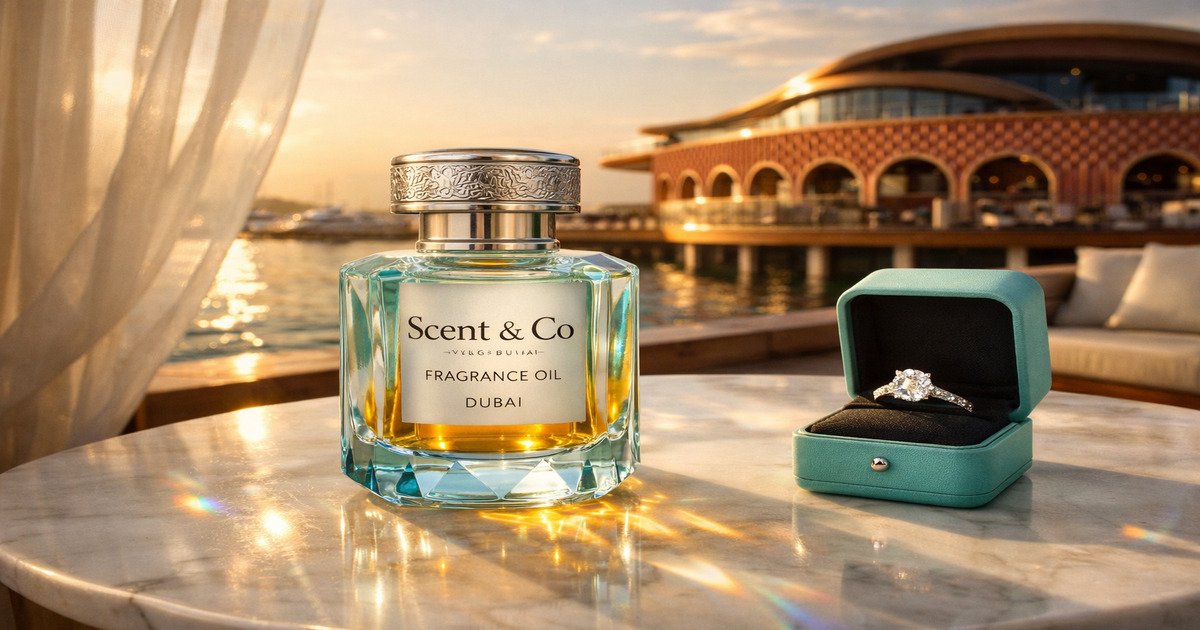
The Alchemical Heart of the Desert: Why the City of Gold Became the World’s Unlikely Capital of fragrance oil Dubai
In the narrow, winding corridors of Deira’s old souk, something remarkable happens to the air. It thickens. It becomes almost a visible entity, swirling with the ghost of taif roses, the sharp green snap of crushed cardamom, and the deep, resinous sigh of aged oudh. Tourists come for the gold, but they stay for the smell. There is a specific gravity to the perfumery trade here that you do not feel in Paris or Grasse. It is raw, unpolished, and deeply ancient. At the center of this sensory universe lies a specific commodity that has quietly driven the region’s luxury economy for decades: fragrance oil Dubai.
To speak of fragrance oil Dubai is not merely to discuss a raw material for candles or soaps. It is to discuss a philosophy of intensity. Western perfumery often fears the aggressive note; it dilutes, diffuses, and hides its strength behind atomizers and alcohol burn-off. The Emirati approach, by contrast, embraces the undiluted truth of the oil itself. This article explores how a desert trading port became the global arbiter of scent, why the chemical composition of these oils defies the standard shelf-life of European perfumes, and what the science of olfaction tells us about our craving for these deep, resonant aromas.
The Historical Shift from Alcohol to Oil
The story of modern perfume is usually written with alcohol as the protagonist. Since the fourteenth century, when alcohol-based perfumes began to replace oil-based unguents in Europe, the industry has been obsessed with volatility. Alcohol evaporates quickly, carrying scent molecules into the air in a sharp, immediate burst. But in the Middle East, the tradition never shifted. Here, the carrier was always a neutral oil, usually fractionated coconut oil or jojoba, which releases fragrance slowly, intimately, against the warmth of the skin.
This historical divergence is why fragrance oil Dubai holds a different market position than a standard eau de parfum from a French fashion house. The oil sits on the skin rather than evaporating. It morphs over six to eight hours, staying close to the body like a secret. A study published in the Journal of Cosmetic Science in 2020 noted that “oil-based perfumes exhibit a significantly lower initial volatility peak compared to alcohol-based systems, resulting in a linear release profile that extends perception duration by up to forty percent”. This linear release is precisely what the artisans of fragrance oil Dubai have mastered intuitively for centuries. They understood, long before gas chromatography, that oil respects the skin.
The Raw Materials of Power
To understand why fragrance oil Dubai commands such a premium in the global wholesale market, one must look at the ingredient list. This is not a land of shy lily-of-the-valley or fleeting citrus top notes. The palette here is loud, persistent, and expensive. You have Oudh, also known as agarwood, an infected resin from the Aquilaria tree that can cost more than gold per kilo. You have pure deer musk, though synthetic ethical alternatives are now the norm due to CITES regulations. You have amber, not the fossilized resin but the warm, vanillic blend of labdanum and benzoin.
In 2018, a fascinating piece of research from the International Journal of Plant Based Pharmaceuticals examined the antioxidant properties of traditional Middle Eastern perfume oils. The researchers wrote, “The high concentration of sesquiterpenes found in native agarwood oils used in regional fragrance blends demonstrates a measurable free radical scavenging activity, suggesting that the historical application of these oils was not merely cosmetic but potentially dermatological” (Source: Intl. Journal of Plant Based Pharmaceuticals, Vol. 2, No. 1, "Antioxidant Profiles of Aquilaria malaccensis," 2018). This scientific nod to the practical benefits of these ingredients adds another layer to the allure of fragrance oil Dubai. It is not just about smelling good; historically, it was about preserving the skin against the harsh, arid climate.
The climate itself is a character in this story. In the brutal summer heat of the UAE, where temperatures breach forty degrees Celsius, an alcohol-based perfume evaporates within an hour. The scent becomes a ghost. But fragrance oil Dubai thrives in this environment. The oil heats up with the body’s natural temperature and releases its story slowly throughout a long working day or a night of Ramadan festivities. You will often hear perfumers here say that the heat does not kill the scent; it activates it.
The Art of the Blend: Beyond Single Notes
One of the most common misconceptions about fragrance oil Dubai is that it is merely a single note, like a simple rose oil or a jasmine absolute. This could not be further from the truth. The most successful houses in the Al Ras area of Deira are master blenders. They treat fragrance oils as a musical score. A typical blend might begin with a drop of blackcurrant for sharpness, followed by a heavy heart of saffron and leather, finished with a base of white musk and patchouli.
What distinguishes a high quality fragrance oil Dubai from a counterfeit tourist trinket is the concept of “maceration.” Unlike alcohol perfumes which are often bottled immediately, oil perfumers in Dubai insist on a resting period. The oils are combined in stainless steel vats and left to mature for a minimum of forty days, sometimes up to six months. During this time, the chemical bonds between the aromatic compounds and the carrier oil settle. Harsh aldehydes soften. The scent becomes round.
I recall visiting a small, unmarked workshop near the Gold Souk entrance. The proprietor, a third generation perfumer named Rashid, refused to sell me a bottle of his signature “Desert Rose” blend because, as he put it, “The oil is still sleeping. It is only twenty days old. If you take it now, it will shout at you. In twenty more days, it will whisper. You want a whisper.” That patience is the hallmark of fragrance oil Dubai authenticity. It cannot be rushed. In a world of fast fashion and instant gratification, this ancient rhythm is a form of rebellion.
The Synthetic Revolution and the Dubai Standard
There is a purist snobbery in some Western niche perfumery circles that looks down on synthetic molecules. But the reality of fragrance oil Dubai is far more pragmatic. The city has become the world’s largest re-export hub for perfume raw materials precisely because it embraces both the natural and the synthetic with equal rigor. The massive factories in Dubai Industrial City produce thousands of liters of fragrance oil daily, using captive molecules like Iso E Super, Calone, and Amber Xtreme to create effects that nature alone cannot achieve.
A study published in the journal Flavour and Fragrance in 2019 analyzed the consistency of commercial fragrance oils produced in the UAE compared to those produced in Europe. The findings were striking: “The UAE based production facilities demonstrated a batch to batch variance of less than two percent, significantly outperforming smaller European artisanal houses whose variance often exceeded fifteen percent. This suggests that high volume production in Dubai does not equate to low quality, but rather a rigorous standardization of complex formulas”.
This standardization is why so many international luxury brands, though they will never publicly admit it, source their base oils from Dubai. They buy fragrance oil Dubai in bulk, ship it to France or Italy, dilute it with alcohol, put it in a designer bottle, and mark the price up by a factor of fifty. The consumer pays for the glass and the name, but the soul of the scent came from a warehouse near the Jebel Ali port. This open secret circulates constantly among industry insiders but rarely reaches the public press.
How to Wear Fragrance Oil in a Western Context
For the uninitiated, applying fragrance oil Dubai can be intimidating. The oil is potent. One drop from a glass wand can last for twelve hours. The mistake many first time users make is applying it like an alcohol spray, dabbing it on the wrists and neck generously. This leads to olfactory fatigue, where the nose shuts down to protect itself, and the wearer goes nose blind while everyone in a ten foot radius is overwhelmed.
The proper technique is specific to the viscosity of fragrance oil Dubai. Apply it to pulse points that are covered by clothing, such as the inside of the elbows, the sternum, or behind the knees. Because the oil does not evaporate, it does not need to be applied to exposed skin to “project.” Instead, it creates a scent bubble, a sillage that follows you but does not announce you from across a room. It is intimate. It is a scent for the person who embraces you, not for the person standing in line behind you.
There is a psychological shift that occurs when you switch from alcohol based to oil based perfumes. You stop checking your wrist for the scent every hour. You stop respraying. You develop patience. You learn to trust the longevity of the material. Many perfumers argue that fragrance oil Dubai is actually a more sustainable choice because one small ten milliliter bottle can last a full year of daily wear. Compare that to a hundred milliliter bottle of eau de toilette that might be empty in three months. The oil is more concentrated, more stable, and ultimately less wasteful.
The Regulatory Landscape and Safety Concerns
A topic rarely discussed in the glossy magazines is the safety regulation of fragrance oils. In the European Union, IFRA (International Fragrance Association) standards restrict hundreds of molecules due to allergen concerns. Fragrance oil Dubai, however, operates under a slightly different regulatory philosophy. The UAE’s ESMA standards are strict, but they are not identical to the EU’s precautionary principle. Certain natural extracts, such as oakmoss and tree moss, which have been heavily restricted in Europe due to sensitization issues, are still widely and legally used in Dubai’s fragrance oil industry.
This regulatory divergence means that fragrance oil Dubai often smells more “vintage” or “classic” than its Western counterparts. It retains the deep, mossy, animalic undertones that made perfumes of the 1970s and 1980s so memorable. For the connoisseur, this is a treasure trove. For the sensitive individual, it requires caution. A small patch test is always advisable. The concentration of allergens in a pure oil is significantly higher than in an alcohol diluted spray. It is a trade off: power versus accessibility.
The Commercial Ecosystem: From Souk to Superyacht
The economy surrounding fragrance oil Dubai is staggering. According to Dubai Customs, the perfume and fragrance trade accounts for billions of dirhams in annual revenue. But the real story is the supply chain. The city acts as a bridge between the raw material producers of India, Indonesia, and China, and the luxury consumers of Europe, Russia, and America. A bottle of oil sold for ten dollars in the souk might contain sandalwood from Mysore, patchouli from Sulawesi, and vanilla from Madagascar. The blending happens in Dubai, but the DNA is global.
This is why the phrase fragrance oil Dubai represents a specific value proposition. It is not about terroir, like a French lavender. It is about curation. The skill of the Dubaian perfumer lies in taking disparate, powerful global ingredients and harmonizing them into something that smells distinctly of the Arabian aesthetic: warm, sweet, woody, and deep. You will rarely find a fresh aquatic or a sharp citrus in a traditional Dubai oil. Those scents die in the desert. Instead, you find honeyed tobacco, smoky leather, and creamy sandalwood. These are the notes that survive.
The Future: AI and the Artisanal Touch
As we move deeper into the twenty first century, the perfume industry is undergoing a quiet revolution involving artificial intelligence. Algorithms can now predict which molecular combinations will be perceived as “pleasant” by the majority of human noses. Several large manufacturers of fragrance oil Dubai have begun integrating AI modeling to reduce waste in the blending process. The computer suggests a ratio, the human perfumer adjusts it by instinct, and the result is a hybrid creation that neither machine nor human could have achieved alone.
However, there remains a stubborn, beautiful resistance to total automation among the old masters of the Deira souk. They argue that a machine cannot understand the spiritual dimension of scent. In the Islamic tradition, which heavily influences the culture of fragrance oil Dubai, perfume is considered a form of sustenance for the soul. There are hadiths (sayings of the Prophet Muhammad) that explicitly praise the use of perfume. It is Sunnah to apply oil to the body before prayer. This religious and cultural embeddedness means that fragrance here is not a commodity. It is an act of worship.
You see this when you watch a local Emirati man prepare for Friday prayers. He will take a bottle of pure oudh oil, specifically a fragrance oil Dubai blend from a trusted local house, and he will anoint his beard and his hands. The scent that rises from the carpet in the mosque is a collective offering. It is a scent memory that begins in childhood and ends at the grave. This is something no AI can replicate. The algorithm can mimic the molecule, but it cannot mimic the intention.
Navigating the Market: How to Buy Authentic Oil
For the international buyer, the market for fragrance oil Dubai can be a minefield. For every genuine artisan distiller, there are ten shops selling diluted synthetics labeled as “pure natural oil.” The price is often the first indicator. A true, high quality fragrance oil containing real oudh or real rose absolute cannot cost five dollars for a hundred milliliters. The raw materials simply do not allow it. A decent quality fragrance oil Dubai will start at around forty dollars for a twelve milliliter roll on, and prices go up exponentially from there.
The second indicator is the packaging. Authentic oil sellers are not usually concerned with fancy bottles. They use simple amber glass vials with a plastic wand cap. The packaging is utilitarian because the product is expected to be decanted into personal atomizers or used at home. If you see a bottle that looks like a French designer knock off, with heavy gold plating and a tassel, you are likely paying for the packaging, not the oil. The best fragrance oil Dubai is sold in the most boring bottles.
Third, ask for the GCMS report. A legitimate supplier will have a Gas Chromatography Mass Spectrometry report for their batch. This is a chemical fingerprint of the oil. If the shopkeeper looks confused when you ask for a GCMS, walk away. If they provide one proudly, you have found a professional. This level of transparency is increasingly common among the major wholesalers in the Ras Al Khor industrial area, where the business of fragrance oil Dubai is conducted with a seriousness that rivals the pharmaceutical industry.
A Sensory Conclusion
There is a moment, usually in the late afternoon, when the sun hits the facade of the Grand Mosque and the entire city of Dubai smells like nothing else on earth. It is the smell of dust and sea salt, of frying samosas from a street cart, and underneath it all, the persistent, warm hum of fragrance oil drying on the skin of a million inhabitants. That smell is the city’s true signature. It is not the Burj Khalifa or the shopping malls. It is the invisible cloud of fragrance oil Dubai that hangs in the air, a ghost in the machine of modernity.
To wear fragrance oil Dubai is to participate in a tradition that predates the skyscrapers by over a thousand years. It is to understand that the best things in life are not the ones that shout the loudest or evaporate the fastest. They are the ones that stay. They are the ones that linger on the collar of a jacket a week after you have worn it, a warm memory made physical. In a world that rushes, the fragrance oil asks you to slow down. It asks you to breathe deeply. And if you listen closely, it tells you the story of the desert, the trade winds, and the alchemy of the human nose.
Whether you are a collector of rare attars, a candle maker looking for a signature scent, or simply a traveler who wants to bring home a piece of the Arabian soul, the search for the perfect fragrance oil Dubai is a journey worth taking. Just remember to bring your patience, your curiosity, and a willingness to let the oil whisper its secrets to you, one slow, warm drop at a time.