
- Diffuser Combo UAE Deals
- Scents
- Floral (Rose, Jasmine)
- ADDRESS Aroma Oil Diffuser 500ML
- PASSION Aroma Oil Diffuser 500ML
- HARMONY Aroma Oil Diffuser 500ML
- LUXURY Aroma Oil Diffuser 500ML
- MOTION Aroma Oil Diffuser 500ML
- SOSPHERA Aroma Oil Diffuser 500ML
- SENSE Aroma Oil Diffuser 500ML
- G BLOOM Aroma Oil Diffuser 500ML
- LEGENDARY Aroma Oil Diffuser 500ML
- FOR HER Aroma Oil Diffuser 500ML
- No 3 Aroma Oil Diffuser 500ML
- PINK Aroma Oil Diffuser 500ML
- Fresh (Citrus, Aquatic)
- Woody / Oriental / Spicy (Oud, Vanilla, Amber, Sandalwood)
- ROYAL WOOD Aroma Oil Diffuser 500ML
- BROWN ORCHID Aroma Oil Diffuser 500ML
- BAKHOUR Aroma Oil Diffuser 500ML
- AMBER LEATHER Aroma Oil Diffuser 500ML
- UNIQUE WOOD Aroma Oil Diffuser 500ML
- ELITE WOOD Aroma Oil Diffuser 500ML
- MARRAKECH Aroma Oil Diffuser 500ML
- Patchouli Aroma Oil Diffuser 500ML
- COTTON CLOUD Aroma Oil Diffuser 500ML
- CHRISTMAS Aroma Oil Diffuser 500ML
- GABRIEL Aroma Oil Diffuser 500ML
- CINNAMON TONKA Aroma Oil Diffuser 500ML
- COFFEE BEANS Aroma Oil Diffuser 500ML
- Aromatic (Fougere) – Lavender, Sage, Rosemary
- Fruity (Berry, Peach)
- Floral (Rose, Jasmine)
Scent Blog
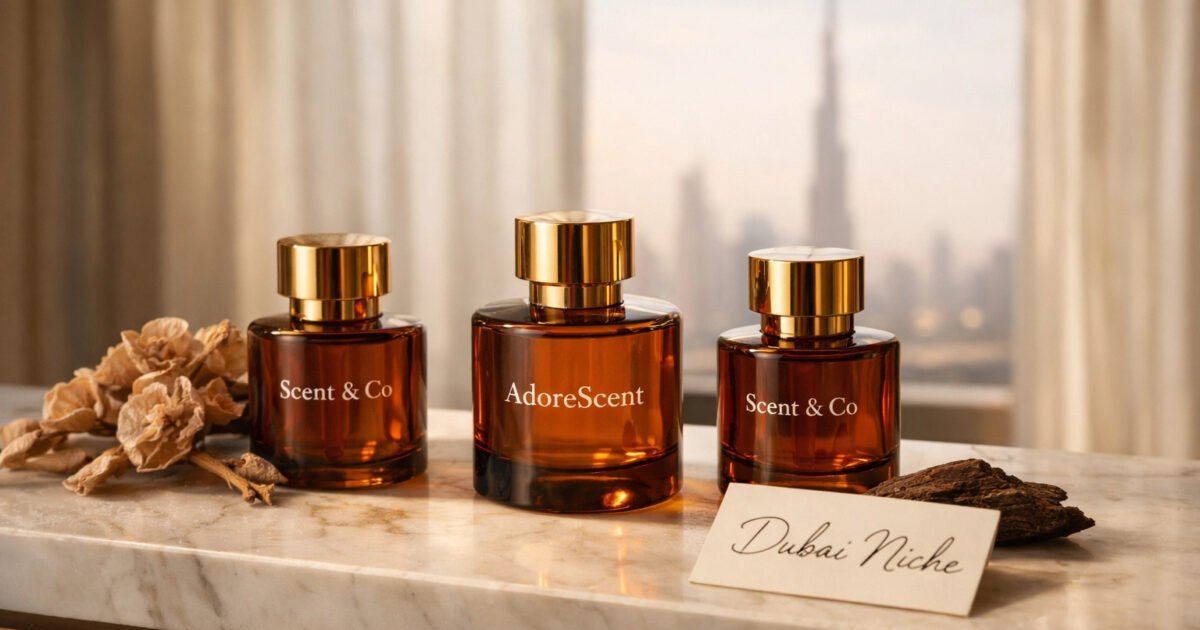
The Art of Silence: Why Niche Perfume Brands Dubai Are Redefining Fragrance
There is a moment, just after the cap is lifted from a bottle of truly exceptional perfume, that the world seems to hold its breath. It is a moment of pure potential, a silent conversation between the liquid in the vial and the skin it is about to meet. In an era dominated by mass production, where fragrance is often reduced to a formula designed to please everyone and therefore no one, the pursuit of this singular moment has led discerning connoisseurs to a specific geographical and spiritual destination. They are searching for the alchemists, the independent creators who prioritize art over market share. They are searching for the niche perfume brands Dubai has cultivated into a global phenomenon.
To speak of niche perfume is to speak of rebellion against the homogenization of scent. For decades, the global fragrance industry operated on a predictable axis, launching flankers of established names and relying on celebrity endorsements to move units. But in the labyrinthine alleyways of Deira’s perfume souk and the sleek, minimalist boutiques of Alserkal Avenue, a different philosophy took root. Here, fragrance was never merely an accessory; it was an inheritance, a language of hospitality, a form of intangible architecture that defined a space and a presence.
Dubai’s rise as the capital of this olfactory renaissance is no accident. The city itself is a study in contrasts the ancient and the futuristic, the arid desert and the manicured coastline, the silent spirituality of the call to prayer and the relentless dynamism of global commerce. This duality is the perfect breeding ground for a fragrance culture that values both the deepest, darkest aged oud and the brightest, most synthetic avant-garde molecule. The niche perfume brands Dubai nurtures are not simply selling a scent; they are distilling the complex identity of a crossroads of the world.
The shift from designer to niche is largely a shift in intention. When you purchase a fragrance from a mainstream fashion house, the primary driver is often the brand’s ready-to-wear aesthetic. The perfume is an extension of a handbag line. But when you engage with the niche perfume brands Dubai has become famous for, you are engaging with the perfumer as an artist. You are buying the story of a specific ingredient, a memory of a journey through the Empty Quarter, or a conceptual exploration of duality. It is the difference between buying a print of a famous painting and commissioning an original piece from a master you admire.
This artistic integrity resonates deeply with a growing demographic of fragrance enthusiasts who are weary of what Dr. Rachel Herz, a cognitive neuroscientist and author of The Scent of Desire, describes as the industry’s reliance on "safe" compositions. In her research on the psychology of smell, she notes, “The emotional authenticity of a scent its ability to truly resonate with an individual’s identity is often inversely proportional to its mass-market availability. We wear scents not just to smell good, but to tell the world who we are or who we aspire to be.” This insight underscores why the niche perfume brands Dubai offers are so compelling. They provide the tools for a more nuanced form of self-expression, one that cannot be found in every airport duty-free shop around the globe.
To understand the depth of this movement, one must first understand the foundational ingredient that underpins much of the region’s perfumery: oud. In the West, oud was once a mysterious, almost intimidating note, associated with deep woods and animalic ferocity. In Dubai, it is the soul of the home. It is the smoke that welcomes guests, the gift given at weddings, the scent that lingers on a traditional kandura. The genius of the modern niche perfume brands Dubai produces lies in their ability to reinterpret this sacred ingredient for a global audience.
They take the raw, untamed essence of aged Cambodian or Hindi oud and marry it with unexpected partners. A traditional scent profile that once stood solely on its own is now being blended with Italian bergamot for a sparkling top note, or with French lavender for an unexpected aromatic twist, or even with the synthetic molecules of iso e super to create a skin-like, ethereal aura. This is not a dilution of tradition; it is an evolution of it. It is a way of honoring the past while speaking a language that a new generation of international fragrance lovers can understand. By doing so, these niche perfume brands Dubai houses are building bridges between Eastern olfactory heritage and Western minimalist sensibilities.
The physical experience of discovering these fragrances in Dubai is itself a departure from the sterile department store experience. There is a tactile, ritualistic quality to it. You are not typically handed a blotter strip sprayed from a foot away. Instead, you are invited to sit. A coffee is poured, often spiced with cardamom, its scent clearing the palate for what is to come. The perfumer or the trained attar specialist will apply a drop of oil to your wrist, asking you to wait, to allow the heat of your skin to unlock the different facets of the composition.
This ritual speaks to a deeper cultural understanding: that patience is a prerequisite for beauty. In a world of instant gratification, where Amazon delivers tomorrow and TikTok trends vanish by the weekend, the niche perfume brands Dubai champions demand that you slow down. They ask you to sit with a fragrance for an hour, to observe how it changes, to see if it harmonizes with your own unique body chemistry. It is an intimate process, one that fosters a deep connection between the wearer and the scent. This connection is the antithesis of the impulse buy; it is a conscious, curated choice.
This emphasis on curation has led to a fascinating economic and cultural ecosystem within the city. Dubai has become a launchpad for independent perfumers from across the Middle East, Europe, and Asia. The city’s strategic location, combined with its business-friendly free zones and its population of wealthy, discerning residents, creates a perfect storm for entrepreneurial perfumers. We are seeing a wave of homegrown talent who grew up with the rich traditions of Arabian perfumery but were educated in the great fragrance capitals of Grasse or Paris. They return to Dubai with a dual perspective, creating works that are technically masterful yet deeply rooted in a sense of place.
Furthermore, the architectural landscape of Dubai mirrors the complexity of its fragrances. Just as a skyscraper like the Burj Khalifa uses cutting-edge engineering to reach towards the heavens, the niche perfume brands Dubai is home to utilize state-of-the-art extraction techniques to capture the purest essence of natural ingredients. However, they also, like the city’s traditional wind towers (barjeel), honor the ancient ways the slow distillation of rose petals in copper stills, the patient aging of oils in leather sacks. This juxtaposition of hyper-modern technology and ancient craftsmanship results in a quality that is virtually impossible to replicate in a mass-market context.
A published study explored the concept of "brand authenticity" in the luxury sector. The researchers found that consumers increasingly associate authenticity with "continuity," meaning a brand’s ability to maintain its heritage and craftsmanship standards over time, and "credibility," which relates to the brand’s intrinsic motivation to deliver quality regardless of commercial pressures. This framework perfectly explains the rise of the niche perfume brands Dubai showcases. These houses often operate with a slower, more deliberate production cycle. They do not need to release four new fragrances a year to satisfy a corporate parent company. They release one when it is ready, when the maceration is complete, when the story is fully told. This credibility builds a fierce loyalty among customers who trust that their investment is going toward artistic integrity rather than marketing hype.
One cannot discuss the olfactory identity of Dubai without acknowledging the profound influence of the natural environment. The desert is not a barren void; it is a landscape of subtle, powerful scents. After the rare rainfall, the air fills with the smell of petrichor the earthy, mineral scent of wet sand and desert plants. The ghaf tree, the national tree of the UAE, releases a distinct, resinous aroma in the heat. The night air carries the sweetness of night-blooming jasmine from hidden courtyards.
The most skilled niche perfume brands Dubai cultivates are tapping into these native scents. They are moving away from the stereotypical "Middle Eastern" notes of the past and exploring the more nuanced botanical palette of the region. We are seeing fragrances that capture the salty, mineralic air of the Arabian Gulf, the green, bitter bite of saffron flowers before they are dried, or the smoky, sweet scent of date syrup. This exploration of terroir gives these fragrances a sense of place that is authentic and non-derivative. It is a form of olfactory storytelling that allows someone wearing the fragrance in London or New York to carry a piece of the Arabian landscape with them.
The materials used in this niche sector are often of a grade rarely seen in commercial perfumery. While a designer fragrance might contain a fraction of a percentage of natural rose oil, a niche house in Dubai is likely to use a high concentration of Taif rose, hand-picked from the mountains of Saudi Arabia, or Bulgarian rose otto, known for its deep, honeyed richness. They use ambergris, the fabled whale secretion that washes ashore on distant beaches, rather than a synthetic approximation. They use real musk, sourced ethically through traditional practices, which provides a velvety, animalic warmth that synthetics struggle to replicate.
For the collector, this commitment to materiality is everything. It turns the act of wearing perfume from a simple grooming habit into a sensual luxury experience. When you spray a fragrance from one of the esteemed niche perfume brands Dubai is known for, you are not just wearing a scent; you are wearing a precious material. You are experiencing the difference between a synthetic vanilla flavoring and the complex, multi-faceted reality of a Madagascar vanilla pod. This materiality creates a sillage, the trail of scent left behind that is distinctive and memorable. It does not shout for attention, but it commands respect through its quality and complexity.
However, the world of niche perfumery in Dubai is not just about oud, rose, and heavy orientals. In fact, one of the most exciting developments in recent years has been the embrace of minimalist and abstract compositions. There is a growing school of thought within the city that rejects the maximalist approach. These perfumers are creating scents that are barely there transparent, aqueous, and built around singular synthetic molecules. They are fragrances for people who love the idea of perfume but are overwhelmed by traditional heavy scents.
This diversity is a testament to the maturity of the market. The niche perfume brands Dubai supports are not monolithic; they represent a spectrum of olfactory tastes. You can find a brand dedicated entirely to the art of single-origin agarwood oils, presented in hand-blown crystal bottles. Next to it, you might find a conceptual brand that only creates fragrances inspired by Brutalist architecture, using notes of concrete, metal, and wet plaster. This variety ensures that Dubai is not just a destination for one type of fragrance lover, but a global hub where any collector, regardless of their preference, can find their holy grail.
The consumer base for these artisanal creations has also evolved. It is no longer exclusively the domain of local Emiratis or wealthy Gulf tourists. There is a burgeoning international community of fragrance enthusiasts who plan pilgrimages to Dubai specifically to explore its niche offerings. Online communities on platforms like Fragrantica and Basenotes are filled with threads dedicated to the latest releases from these houses. Social media influencers who specialize in “fragcomm” (fragrance community) content frequently cite Dubai as the undisputed capital of the artisanal movement.
This global attention has created a feedback loop of innovation. As international audiences bring their diverse preferences for gourmands, chypres, or green fragrances the niche perfume brands Dubai hosts are responding by expanding their creative horizons. We are seeing the emergence of fragrances that blend the structure of a classic French fougère with the smoky depth of birch tar and the sweetness of regional dates. We are seeing Italian citrus colognes given a new dimension with a base of rare, mineralistic patchouli from the Indonesian islands, traded through Dubai’s historic ports.
It is also crucial to address the sustainability aspect of this industry. As the world becomes more conscious of environmental impact, the niche perfume sector in Dubai is quietly leading a charge toward ethical sourcing. Because these brands are smaller and often have direct relationships with their raw material suppliers, they can ensure traceability. They know the farmer who grew the jasmine. They know the distiller who processed the sandalwood. This transparency is a significant departure from the opaque supply chains of the multi-national conglomerates.
Moreover, the cultural emphasis on value and longevity in the region aligns with sustainable principles. In the West, there has long been a trend toward “fast fragrance” affordable, fleeting scents meant to be used up and replaced. In Dubai, a fragrance is considered a long-term investment. A bottle of high-quality oud oil, stored properly, can last for decades, often improving with age. The niche perfume brands Dubai champions encourage this mindset. They offer refill services, produce high-concentration extraits that require only one spray, and design bottles that are intended to be heirlooms, not disposable containers.
The sensorial journey of purchasing such a fragrance is an education in itself. Walking through a dedicated niche perfumery in Dubai, one is struck by the silence. There is no blaring pop music, no aggressive sales tactics. The lighting is often dim, focused like a spotlight on the bottles on the shelves. It feels more like an art gallery than a retail space. This ambiance is intentional. It signals that you are entering a space for contemplation. The sales associates are often perfumers themselves or possess an encyclopedic knowledge of the compositions. They ask about your preferences not in terms of “sweet” or “floral,” but in terms of emotions. Do you want to feel grounded? Do you want to feel energized? Do you want a fragrance that evokes a memory of the sea?
This consultative approach is rooted in the region’s deep-seated culture of hospitality, or hafawa. In the UAE, welcoming a guest and making them feel honored is paramount. When you visit a perfumery dedicated to niche perfume brands Dubai has curated, you are treated as a guest in someone’s home, not a customer on a sales floor. This level of service transforms the transaction into a memorable cultural experience. It is why many visitors to Dubai return home with a suitcase filled not with gold or electronics, but with bottles of perfume each one tied to a memory of a conversation, a shared coffee, and a moment of genuine connection.
The design of the bottles themselves also speaks to the artistry involved. In the mass market, bottles are often designed by marketing committees to look appealing on a shelf in a department store. In the niche world, the bottle is an extension of the artistic vision. Niche perfume brands Dubai is known for collaborating with glassblowers in Italy, crystal makers in France, and metal workers in the region to create vessels that are sculptural works of art. Some bottles are weighted to feel substantial in the hand. Others are designed with magnetic caps that snap into place with a satisfying click, mimicking the precision of the fragrance inside. Every detail, from the font on the label to the texture of the box, is considered.
Looking toward the future, the trajectory of this industry in Dubai is poised for even greater expansion. The city is increasingly positioning itself as a global hub for the cultural industries, and fragrance is a key pillar of that strategy. There is a growing recognition that the niche perfume brands Dubai fosters are not just commercial entities; they are cultural ambassadors. They export a vision of the city that is sophisticated, artistic, and deeply rooted in heritage while simultaneously embracing the future.
We are beginning to see collaborations between these perfumers and other creative fields fashion designers, visual artists, architects, and even chefs. These cross-disciplinary projects push the boundaries of what a fragrance can be. A perfume might be launched in conjunction with an art exhibition, with the scent acting as an olfactory interpretation of the visual works on display. A chef might collaborate with a perfumer to create a dining experience where each course is paired with a specific fragrance, exploring the intersection of taste and smell.
This interdisciplinary approach is attracting a new level of critical attention. Fragrance critics and historians are beginning to write extensively about the Middle Eastern niche movement, recognizing it as the most significant and innovative force in contemporary perfumery. For years, the narrative of fragrance innovation was centered almost exclusively in Europe. Now, the center of gravity is shifting Eastward. Dubai is not just a market for these scents; it is a muse. It is a place where the constraints of traditional perfumery are being dismantled and rebuilt according to a new set of rules rules that prioritize quality, storytelling, and emotional resonance above all else.
In a world that often feels increasingly digital, disembodied, and disconnected from physical reality, the act of choosing and wearing a fragrance from the niche perfume brands Dubai has to offer is a reclamation of the physical self. It is an assertion that the body matters, that the senses matter, that the intangible experience of smelling something beautiful is a vital part of being human. It is a quiet act of rebellion against the mediocrity of the generic.
As the renowned cultural anthropologist and sensory scholar David Howes noted in his work on sensory history at Manifesto, Concordia University, “The most profound shifts in culture are often first detected not in the grand narratives of politics or economics, but in the intimate sphere of the senses in the way we choose to adorn ourselves, to scent our homes, and to define the boundaries of our personal space.” The rise of the niche perfume brands Dubai leads exemplifies this shift. It represents a collective desire to reclaim intimacy, to invest in quality, and to engage with the world on a deeper, more meaningful sensory level.
Ultimately, the allure of these fragrances lies in their ability to tell a story that is both personal and universal. They capture the paradox of Dubai itself a city built on ambition, yet rooted in tradition; a place of blinding speed, yet filled with moments of quiet, deliberate ritual. To wear one of these fragrances is to wear a piece of that narrative. It is to carry with you the warmth of Arabian hospitality, the complexity of ancient trade routes, and the precision of modern artistry.
For the seeker, the collector, or simply the person who longs for a scent that feels like home, the journey into this world is endlessly rewarding. It requires a willingness to look beyond the familiar, to sit with complexity, and to trust your own nose above all else. In the hushed, carpeted showrooms of Dubai’s finest perfumeries, that journey begins not with a sale, but with a question: What story do you want to tell? And the answer, waiting in a hand-blown bottle filled with liquid gold, is always a conversation worth having. As the sun sets over the city, casting long shadows across the desert, the scent of oud mingles with the sea breeze, a reminder that in this city of superlatives, the most luxurious thing you can own is a scent that is unapologetically, singularly, and beautifully yours. The legacy of the niche perfume brands Dubai continues to build is not just one of commerce, but of a sensory revolution that is changing the way the world understands and experiences the art of perfume.