
- Diffuser Combo UAE Deals
- Scents
- Floral (Rose, Jasmine)
- ADDRESS Aroma Oil Diffuser 500ML
- PASSION Aroma Oil Diffuser 500ML
- HARMONY Aroma Oil Diffuser 500ML
- LUXURY Aroma Oil Diffuser 500ML
- MOTION Aroma Oil Diffuser 500ML
- SOSPHERA Aroma Oil Diffuser 500ML
- SENSE Aroma Oil Diffuser 500ML
- G BLOOM Aroma Oil Diffuser 500ML
- LEGENDARY Aroma Oil Diffuser 500ML
- FOR HER Aroma Oil Diffuser 500ML
- No 3 Aroma Oil Diffuser 500ML
- PINK Aroma Oil Diffuser 500ML
- Fresh (Citrus, Aquatic)
- Woody / Oriental / Spicy (Oud, Vanilla, Amber, Sandalwood)
- ROYAL WOOD Aroma Oil Diffuser 500ML
- BROWN ORCHID Aroma Oil Diffuser 500ML
- BAKHOUR Aroma Oil Diffuser 500ML
- AMBER LEATHER Aroma Oil Diffuser 500ML
- UNIQUE WOOD Aroma Oil Diffuser 500ML
- ELITE WOOD Aroma Oil Diffuser 500ML
- MARRAKECH Aroma Oil Diffuser 500ML
- Patchouli Aroma Oil Diffuser 500ML
- COTTON CLOUD Aroma Oil Diffuser 500ML
- CHRISTMAS Aroma Oil Diffuser 500ML
- GABRIEL Aroma Oil Diffuser 500ML
- CINNAMON TONKA Aroma Oil Diffuser 500ML
- COFFEE BEANS Aroma Oil Diffuser 500ML
- Aromatic (Fougere) – Lavender, Sage, Rosemary
- Fruity (Berry, Peach)
- Floral (Rose, Jasmine)
Scent Blog
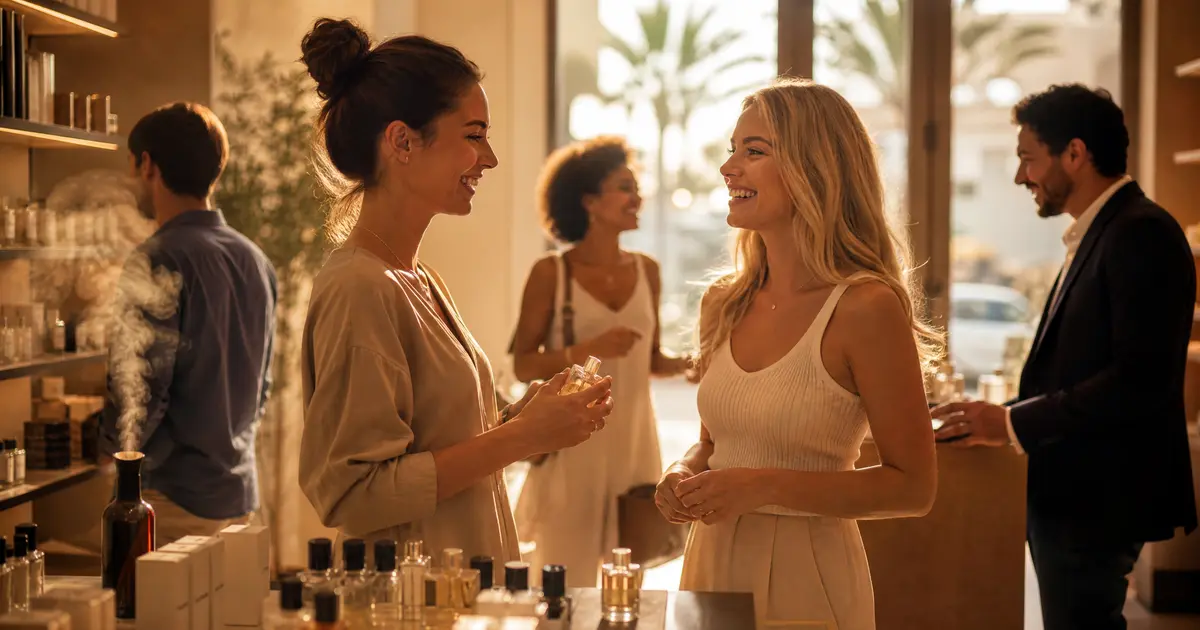
Olfactory Branding: The Silent Salesman for the UAE’s Modern Market
In the heart of Dubai, a luxury boutique recently opened its doors. It wasn't the gold leaf or the Italian marble that stopped customers in their tracks. It was a whisper of fragrance, intentionally cool air, and velvet-lined walls designed to heighten a singular experience. As one global beauty CEO noted recently, the city has become a stage where brands must play their part flawlessly to stand out . Here, in one of the most competitive retail landscapes on earth, the battle for customer loyalty is no longer won solely by visuals or price tags. It is won deep in the limbic system.
This is the domain of olfactory branding, a sophisticated strategy that moves beyond simple air freshening to create an unbreakable emotional and psychological bond. For UAE businesses, from sprawling hotels on the Palm to boutique Emirati perfumeries like Rasasi and Arabian Oud, scent is not an afterthought. It is a strategic imperative. As we look toward 2026 and beyond, understanding this "silent salesman" is the key to unlocking unparalleled customer retention in a high-churn market.
Why the UAE’s DNA is Wired for Scent
To ignore scent in the UAE is to ignore the fabric of the culture itself. This is a land with a historic and deeply rooted fragrance heritage. Long before international brands arrived, the burning of Oud and Bakhoor filled Emirati homes, a tradition where scent is seen not just as a luxury but as the ultimate hallmark of hospitality and respect .
The local consumer possesses a highly developed and complex olfactory palate. They often layer fragrances, blending traditional oils with modern sprays, not merely to smell good, but as a profound expression of identity and personal image . Consequently, any commercial space that overlooks this dimension risks being perceived as sterile, unwelcoming, or simply incomplete. In a market defined by premium experiences, olfactory branding bridges the gap between a transaction and a memory.
This deep cultural connection, however, means that brands must tread carefully. Authenticity is non-negotiable. A synthetic, cheap-smelling fragrance diffused in a five-star environment will do more damage to your brand equity than having no scent at all. The UAE consumer’s nose is educated; it knows the difference between a cheap imitation and a high-quality, IFRA-certified fragrance oil that respects their wellbeing .
The Neuroscience of the Invisible Logo
Why does scent marketing often called olfactory branding work faster than a billboard? The answer lies in the brain’s unique wiring. The olfactory system is directly connected to the amygdala and hippocampus, the regions responsible for emotion and memory. Visual, auditory, and tactile data are routed through the thalamus before reaching cognitive processing centers, but scent takes an instant, unfiltered shortcut to our emotional headquarters.
A customer might forget the pattern of a lobby carpet or the background music in a coffee shop, but the brain stores scents with extraordinary precision and tags them with the emotions felt at the moment of exposure. When a UAE hospitality or retail business deploys a signature scent using advanced HVAC-integrated diffusers, it is performing a kind of neural anchoring. This creates a powerful brand recall; the smell of fresh desert rain mixed with sandalwood becomes the silent, unmistakable ambassador for a resort, recalling positive memories long after the guest has departed.
This biological reality translates directly into measurable commercial gains. Research consistently shows that customers tend to spend more time in pleasantly scented spaces, prolonging exposure to products and increasing the likelihood of purchase. Moreover, the perceived quality of a service can be dramatically elevated when the ambient aroma aligns with a brand’s prestige, allowing businesses to command premium prices simply by making the environment "feel" more expensive .
Precision, Not Pollution: How Scent Technology Has Evolved
The days of cheap aerosol sprays and heat-based oil warmers are long gone and in a market like the UAE, they are entirely ineffective. Heat degrades fragrance oils, altering their chemical composition and turning a top note of Bergamot into a burnt, unrecognizable residue.
Modern olfactory branding relies heavily on Cold Air Nebulization technology. This dry-air diffusion system uses high-compressed air to break down pure fragrance oils into a micro-fine, dry mist of nano-particles, without the use of heat or water. This accomplishes several critical goals: it preserves the aromatic integrity of the fragrance, ensures a consistent scent experience across up to 10,000 square feet, and prevents mold or chemical degradation in the HVAC system . For large venues in Dubai and Abu Dhabi, this technology integrates seamlessly into existing ductwork, turning the entire building into a controlled sensory canvas.
Furthermore, smart programming has entered the equation. Businesses can now program intensity levels via mobile apps to align with peak footfall hours, ramping up a refreshing citrus note during a busy checkout time and mellowing it to a relaxing amber during off-peak hours. This precision ensures that the olfactory branding remains effective and subtle, never overwhelming.
Earning Trust Through Olfactory Transparency
As Google’s evolving guidelines prioritize Trustworthiness and Experience (the cornerstones of E-E-A-T), businesses must apply these same principles to their scent strategies . A brand’s digital authority and physical environment are now judged by identical standards of authenticity.
The Framework Applied to Scent
Experience: A scent should reflect a lived-in, authentic connection to the region. Dubai visitors want to experience the "soul" of the place. Synthesizing a brand story through scent requires firsthand insight into local raw materials and cultural preferences, not just a generic, global template .
Expertise: Selecting a scent partner requires demonstrable technical knowledge. Are they using Cold Air Nebulization? Do they understand the difference between top, middle, and base notes in a high-temperature climate? Showcasing this technical depth signals operational competence.
Trustworthiness: Radical transparency is now a consumer demand. Just as a website needs an SSL certificate, a scenting program in 2026 should openly communicate its safety standards using IFRA-certified oils, explaining that their diffusers are hypoallergenic, and adhering to "clean scenting" protocols that avoid volatile organic compounds . If a scent is synthetic but marketed as natural, the modern UAE consumer will find out, and the breach of trust will be costly.
This ethical framework is not just compliance; it is a market differentiator. When a hotel or bank transparently communicates that its signature scent is safe for allergy sufferers and environmentally responsible, it reinforces a safety signal that directly impacts dwell time and brand affinity.
From Cultural Ritual to Commercial ROI
The UAE’s perfume market is projected to maintain steady growth, driven by premiumisation and the fusion of traditional regional preferences with international styles . This is particularly visible in the booming unisex perfume segment, which aligns perfectly with the local aesthetic of rich, complex ouds and woody notes that transcend gender.
But olfactory branding extends the reach of fashion and beauty retail into a functional business tool. In a market characterized by a transient, tourist-heavy population, a distinct signature scent acts as a powerful "spatial marker." It allows a customer returning to a Dubai mall after a year to instantly feel a sense of familiar premium atmosphere the moment the cold air hits them, carrying the brand's signature note .
Local giants have long understood this connection. Brands like Abdul Samad Al Qurashi and Ajmal have built empires not just on the quality of their bottled perfume, but on the sensory experience of their retail environments, where the very air promises luxury . Now, this strategy is being adopted across sectors: banks use refreshing, "clean" scents to reduce perceived wait times, while automotive showrooms use leather-woody accords to reinforce craftsmanship.
The lesson for UAE businesses is clear: your scent is not just an aroma. It is the atmospheric manifestation of your brand’s authority. Whether you are launching a multi-sensory campaign as part of a rebrand much like the luxury fragrance sector has done with high-impact media strategies or simply scenting a lobby, consistency is key. The tone, the volume, and the character of the scent must be as recognizable as your logo .
Futureproofing Your Brand with Scent
The luxury market in the Middle East and Africa is poised for a decade where digital infrastructure and AI adoption will coexist with a surging demand for sensory, human-first experiences . While consumers discover products online, the physical store remains the place where trust is sealed. Scent is the bridge. It is a powerful tool for brands aiming to build the kind of top-of-mind authority that translates into branded search and long-term digital visibility.
In the silent, competitive arena of Dubai’s business landscape, every detail matters. As brands fight for attention on screens, the smartest players are winning hearts through the nose. In a city where the best way to be remembered is often to be seen, the more profound luxury is often just to be smelled and never forgotten.